


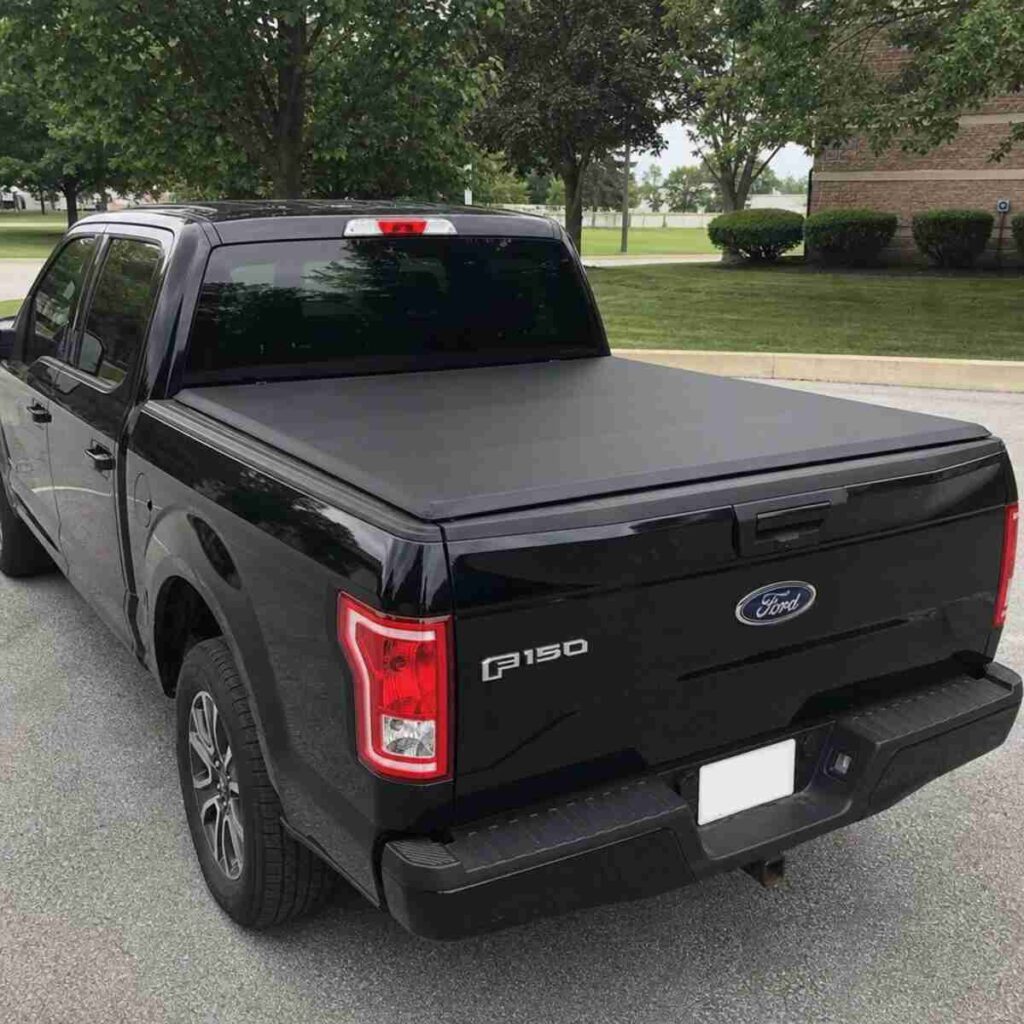
Investing in a high-quality truck bed cover is one of the smartest decisions a truck owner can make. Not only does it secure your valuable cargo from theft and weather, but it also improves your truck’s aerodynamics, potentially boosting your gas mileage. However, like any exterior automotive accessory, your cover is constantly exposed to harsh environmental elements. UV rays, freezing temperatures, torrential rain, road salt, and abrasive dust all conspire to degrade its materials and mechanical components over time. Pick out the best tonneau cover.
Learning exactly How to maintain your tonneau cover (tips, cleaning, seasonal care, troubleshooting) is the key to protecting your investment. Whether you are dealing with a classic soft roll-up vinyl cover, a heavy-duty painted fiberglass lid, or a rugged retractable aluminum unit, a proactive maintenance routine will save you money and headaches in the long run.
In this comprehensive, step-by-step guide, we will walk you through everything you need to know about caring for your cover. From daily maintenance and seasonal preparation to troubleshooting frustrating leaks and rattling noises, this ultimate resource is designed to keep your cover looking brand new and functioning flawlessly for years to come.
1. Understanding Your Tonneau Cover Material
Before you start scrubbing or spraying chemicals, you must understand what your cover is made of. The maintenance routine for a soft vinyl cover is vastly different from that of a rigid fiberglass lid. Using the wrong products can cause irreversible damage, void your warranty, and ruin your vehicle’s aesthetics.
There is a vast array of truck bed covers on the market today, but they generally fall into a few primary material categories.
Vinyl (Soft Roll-Up and Soft Folding Covers)
Vinyl is the most common material used for affordable, lightweight truck bed covers. It consists of a polyester or canvas backing coated with polyvinyl chloride (PVC). While modern marine-grade vinyl is highly durable, it is incredibly susceptible to UV degradation. Without proper care, vinyl will dry out, shrink, fade from deep black to a chalky gray, and eventually crack.
Canvas and Acrylic Fabric
Premium soft covers sometimes use woven canvas or acrylic fabric (similar to convertible car tops or marine boat covers). These materials offer a highly sophisticated, matte look and are exceptionally resistant to UV rays and temperature fluctuations. However, they are porous. They require specialized waterproof coatings to prevent water from seeping through the weave and soaking your truck bed.
Aluminum (Hard Folding, Retractable, and Slatted Covers)
Aluminum is favored for its incredible strength-to-weight ratio and security. Most aluminum covers are finished with a textured powder coat or a matte black paint. While aluminum itself won’t rust like steel, the finish is vulnerable to oxidation, staining from hard water, and scratching from improper washing techniques.
Fiberglass and ABS Plastic (One-Piece Solid Covers)
Fiberglass lids are often painted to perfectly match your truck’s factory paint job, while ABS plastic covers are usually formed with a textured, unpainted finish. The painted fiberglass covers require the exact same care as the rest of your truck’s exterior paint (washing, clay barring, polishing, and waxing).
When considering maintaining aluminium vs. fibreglass tonneau covers, the key difference lies in the finish. Aluminum covers usually feature a rugged, industrial powder coat that requires specialized synthetic sealants, while fiberglass covers require traditional automotive waxes or ceramic coatings to protect their high-gloss clear coat.
2. Routine Cleaning Procedures: The Foundation of Maintenance
Dirt, bird droppings, tree sap, and road grime are not just unsightly; they are actively corrosive. Left unattended, these contaminants will eat into vinyl, permanently stain canvas, and degrade the powder-coated finishes of hard covers.
Establishing a Cleaning Schedule
For optimal longevity, you should lightly wash your tonneau cover every time you wash your truck (typically every two weeks). However, a deep clean and conditioning treatment should be performed once a month or at the change of every season.
The Tools You Will Need
- Two-bucket wash system: One bucket for soapy water, one bucket for plain water to rinse your wash mitt. (This prevents you from rubbing dirt back into the cover).
- High-quality wash mitt: Microfiber or lambswool.
- Soft-bristle detailing brush: Crucial for getting into the crevices of canvas weaves or textured vinyl.
- Microfiber drying towels: Waffle-weave or plush microfiber to prevent water spots.
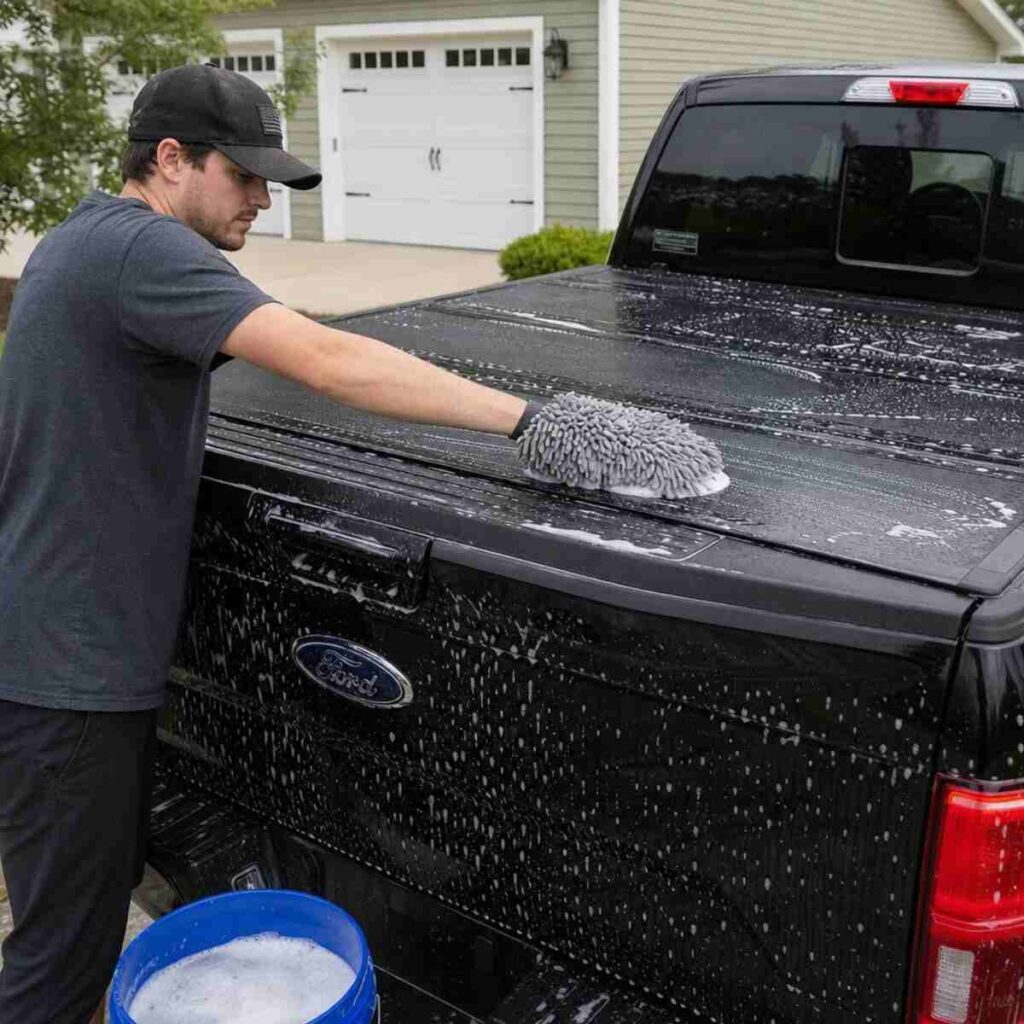
Choosing the Right Cleaning Solutions
One of the most common mistakes truck owners make is using harsh household detergents. Never use dish soap (like Dawn) on your tonneau cover. Dish soaps are formulated to strip grease, meaning they will aggressively strip the essential plasticizers out of your vinyl, the wax off your fiberglass, and the protective sealants off your aluminum, leading to rapid drying and cracking.
When searching for safe soaps for cleaning truck bed covers, look for pH-neutral automotive car wash shampoos. These are gentle enough to lift dirt without stripping away protective layers. For heavily soiled covers, look for dedicated tonneau cover cleaners that do not contain petroleum distillates, bleach, or harsh degreasers.
Step-by-Step: Cleaning Hard Folding vs Soft Roll-Up Covers
While the soap might be the same, the technique differs based on your cover type.
Cleaning Soft Roll-Up and Folding Covers (Vinyl/Canvas):
- Cool Down: Never wash a soft cover in direct sunlight or when the material is hot to the touch. Heat bakes the soap into the porous material, causing permanent stains.
- Initial Rinse: Use a gentle spray from your hose to knock off loose dirt. Do not use a high-pressure washer near the vinyl, as it can slice the material or force water past the weatherstripping.
- Lather and Agitate: Apply your pH-neutral soap. Instead of a wash mitt, use a soft-bristle brush for textured vinyl and canvas. Scrub in gentle, circular motions. This lifts the dirt out of the artificial “grain” of the vinyl.
- Rinse Thoroughly: Ensure no soap residue remains. Soap residue will attract dirt like a magnet once the cover is dry.
- Pat Dry: Do not let the cover air dry, as this leaves hard water spots. Gently pat the cover dry with your microfiber towels.
Cleaning Hard Folding and Retractable Covers (Aluminum/Fiberglass):
- Rinse: Hose down the cover to remove abrasive dust.
- Wash with a Mitt: For painted fiberglass or smooth aluminum, ditch the brush (which can cause micro-scratches) and use a plush microfiber wash mitt. Wash in straight lines (front to back) rather than circles to minimize the appearance of swirl marks.
- Clean the Crevices: Hard folding covers have rubber hinges, and retractable covers have dozens of aluminum slats. Use a small, soft detailing brush to gently agitate the soap in these tight spaces where grime builds up and impedes movement.
- Rinse and Dry: Rinse thoroughly and dry completely to prevent mineral deposits from baking into the powder-coated finish.
Removing Stubborn Stains and Biological Matter
Tree Sap and Bird Droppings: These are highly acidic. If left on a soft cover, bird droppings will permanently bleach the vinyl. Do not scrape them off dry. Soak a microfiber towel in hot water with a little car wash soap. Place the wet towel directly over the sap or dropping and let it sit for 5 to 10 minutes to soften the material. Gently wipe it away.
Removing Mildew from Tonneau Cover Fabric: If you live in a humid climate or frequently park under trees, you may notice black or green fuzzy spots forming on your soft cover or along the canvas edges. This is mildew, and normal car soap will not kill the spores.
For removing mildew from tonneau cover fabric, avoid bleach, as it will destroy the stitching and discolor the fabric. Instead, create a solution of one part white vinegar to three parts warm water.
- Spray the solution generously onto the affected areas.
- Let it sit for 15 minutes (the acetic acid in the vinegar safely kills the mold spores).
- Gently scrub with a soft-bristle brush.
- Rinse thoroughly with clean water and allow the cover to dry completely in the direct sun, as UV light also acts as a natural fungicide.
3. Conditioning and Protection Against the Elements
Washing your cover only removes the dirt; it does not protect the material. Protection is the most vital step in extending the lifespan of a truck bed cover. Without protective coatings, the sun will rapidly degrade your cover.
Protecting Vinyl Covers from UV Damage
As mentioned, vinyl requires specialized care. As it bakes in the sun, the plasticizers (the chemicals that make the vinyl flexible) evaporate. This is why neglected covers feel stiff and brittle.
Finding the Best UV protectant for vinyl tonneau covers is crucial. You must strictly avoid any protectant that contains petroleum distillates or silicone oils (such as traditional tire shines or cheap interior dashboard sprays). While these products make the cover look incredibly glossy and wet in the short term, they actually act as a magnifying glass for UV rays, accelerating the drying process. Furthermore, silicone oils leave a greasy residue that attracts dust, turning your black cover gray within a week.
Instead, look for a water-based, aerospace-grade UV protectant (brands like 303 Aerospace Protectant or specialized tonneau cover protectants).
- Ensure the cover is 100% clean and dry.
- Spray the protectant onto a microfiber applicator pad (not directly onto the cover to avoid overspray on your truck’s paint and glass).
- Work the protectant into the vinyl using overlapping circular motions.
- Allow it to sit for 5 minutes, then take a clean microfiber towel and vigorously buff off the excess. A good protectant should leave a rich, dark, matte finish—not a greasy shine.
Sealing and Protecting Canvas Covers
Canvas and acrylic covers do not dry out and crack like vinyl, but they do lose their ability to repel water over time. The factory waterproofing will eventually wear off, causing the fabric to absorb water, leading to sagging, mildew, and leaks.
Applying water repellent to canvas truck covers is an easy annual maintenance task.
- Wash and thoroughly dry the canvas cover. It must be bone dry; otherwise, the water repellent will not bond to the fibers.
- Use a specialized fabric guard (like 303 Fabric Guard or a convertible top waterproofer).
- In a well-ventilated area, spray a light, even coat across the entire cover.
- Allow it to dry in the sun for 1-2 hours.
- Apply a second light coat in a cross-hatch pattern (perpendicular to your first coat) to ensure total coverage.
- Once cured, water should bead up and roll completely off the fabric.
Preventing Oxidation on Hard Covers
Whether you have a powder-coated aluminum cover or a rugged ABS plastic cover, the sun will eventually cause the finish to oxidize, making it look dull and chalky.
Learning how to prevent oxidation of a tonneau cover requires a proactive approach. For painted fiberglass, treat it exactly like your truck’s hood: use a high-quality carnauba wax, synthetic polymer sealant, or a ceramic coating every 3 to 6 months.
For matte or powder-coated aluminum, do not use traditional paste car wax. Paste wax will get stuck in the microscopic pores of the textured finish and turn white as it dries, ruining the cover’s appearance. Instead, use a synthetic liquid spray sealant or a spray-on ceramic detailer designed for matte finishes. These wipe on easily, provide incredible UV protection, and make future washing much easier because dirt won’t stick to the slick surface.
4. Mechanical Maintenance: Keeping Parts Moving Smoothly
A tonneau cover isn’t just a piece of fabric or metal; it is a mechanical system involving rails, hinges, clamps, locks, and tracks. Neglecting the moving parts will lead to a cover that binds, sticks, rattles, or fails to lock securely.
Lubricating the Hardware
Retractable covers roll up into a canister on specialized tracks, while hard folding covers rely on a series of continuous hinges. These mechanisms are exposed to dust, sand, and moisture daily.
When lubricating truck bed cover rails and hinges, the biggest mistake you can make is reaching for a standard oil-based lubricant like WD-40 or white lithium grease. Oil and grease remain sticky. As you drive down a dirt road, dust and sand will blow into the rails, stick to the oil, and create a thick, abrasive grinding paste that will eventually destroy the bearings and hinges.
Instead, you must use a Dry PTFE (Teflon) spray or a dry silicone spray.
- Clean the rails and tracks thoroughly. Use a damp cloth to wipe out any accumulated dirt or old, gunky grease.
- Spray a light coating of the dry silicone lubricant directly into the tracks, hinges, and lock cylinders.
- Because it dries to a slick film, it will provide excellent lubrication without attracting dirt.
- Open and close the cover several times to distribute the lubricant evenly.
- Perform this mechanical maintenance at least twice a year, or more frequently if you frequently drive in dusty, off-road conditions.
Maintaining Tension on Soft Covers
Soft roll-up covers utilize a tension control system at the cab or tailgate end to keep the vinyl stretched tight like a drum. This is critical for two reasons: a tight cover sheds water effectively (preventing pooling), and it prevents the vinyl from flapping in the wind at highway speeds (which stretches the material and causes premature wear).
However, vinyl is highly sensitive to ambient temperature. In the scorching summer heat, vinyl expands and becomes loose. In the freezing winter, it shrinks and becomes incredibly tight, sometimes making it nearly impossible to snap shut.
Adjusting tension on soft tonneau covers is a vital seasonal maintenance task.
- In the Summer: If you notice your cover is flapping on the highway or water is pooling in the center after a rainstorm, you need to increase the tension. Locate the tension adjustment blocks (usually found on the side rails near the cab). Most systems use a dial or a pin system. Move the setting to increase the tension until the cover is taut.
- In the Winter: As temperatures drop in late autumn, the vinyl will begin to shrink. If you try to force a shrinking cover closed, you can tear the vinyl or snap the locking mechanism. To prevent this, slightly reduce the tension settings before the deep freeze sets in, allowing the material to contract naturally.
Checking and Torquing Clamps
Most modern truck bed covers are “no-drill” installations, meaning they attach to the truck bed rails via a series of aluminum C-clamps. Over time, the constant vibration of driving, chassis flex, and temperature changes can cause these clamps to loosen.
Every three months, take a socket wrench and verify that all the mounting clamps are torqued down securely. A loose clamp can cause the entire cover assembly to shift out of alignment, leading to water leaks, rattling noises, and in extreme cases, the cover flying off on the highway.
5. Seasonal Care: Adapting to Weather Extremes
Your maintenance routine must adapt to the changing seasons, as each season presents unique threats to your truck bed cover.
Winter Care Tips for Truck Bed Covers
Winter is arguably the harshest season for exterior automotive accessories. Sub-zero temperatures, heavy snow accumulation, and corrosive road salts require a specialized approach.
Dealing with Snow Load: If you park outside, snow will accumulate on your cover. Hard folding and retractable covers are designed to support a certain amount of evenly distributed weight (often up to 300-400 lbs). Soft covers, however, can easily be stretched, bowed, or even ripped by heavy, wet snow.
Never use a sharp ice scraper or a hard plastic snow shovel to clear snow off your cover. You risk tearing the vinyl or deeply scratching the aluminum. Instead, use a soft foam snow broom or a standard push broom with soft bristles to gently sweep the snow off after every major storm. Do not let snow sit and freeze into a solid block of ice, as the extreme weight will warp the aluminum support bows of a soft cover.
Preventing Frozen Seals: One of the most frustrating winter issues is having your cover freeze shut to the tailgate or the bed rails. This happens when moisture gets trapped between the rubber weather stripping and the cold metal, freezing solid overnight.
As part of your winter care tips for truck bed covers, take time in late autumn to treat all the rubber weather seals. Use a dedicated rubber protectant (like Nextzett Gummi Pflege) or wipe a thin layer of dry silicone spray along the seals. This conditions the rubber, displaces water, and prevents the seals from freezing to the truck bed, ensuring you can still access your cargo in the dead of winter.
Handling a Frozen Soft Cover: If you have a soft vinyl roll-up cover, avoid rolling it up in extreme cold whenever possible. Frozen vinyl becomes incredibly stiff and brittle. Attempting to roll it tightly can cause micro-cracks in the PVC coating. If you absolutely must access the bed, roll it up slowly and loosely.
Spring and Summer Care
As winter gives way to spring, the primary threats shift from ice and salt to pollen, tree sap, and intense UV radiation.
- Spring Cleaning: Perform a deep wash to remove all winter road salt, which is highly corrosive to aluminum rails and hinges. Pay special attention to flushing out the tracks.
- Summer Heat: As the UV index peaks, increase the frequency of your UV protectant application on vinyl covers. Park in the shade or a garage whenever possible to minimize direct sun exposure. Check and adjust the tension of your soft cover as the material expands in the heat.
6. Troubleshooting Common Tonneau Cover Issues
Even with the most meticulous maintenance routine, issues can still arise as your cover ages. Knowing how to diagnose and fix these problems will save you a costly trip to the dealership.
Water Ingress: How to Stop Tonneau Cover Leaks
Let’s be realistic: very few tonneau covers are 100% completely waterproof. A high-quality cover will keep out 98% of the water during a heavy rainstorm, but a few drops are normal. However, if your truck bed is turning into a swimming pool after a storm, you have a problem.
The most common entry point for water is not the cover itself, but the truck bed design. Modern truck tailgates have massive gaps at the bottom and the sides. When driving in the rain, the aerodynamic vortex behind the cab actually sucks water and road spray up through these tailgate gaps and into the bed.
If you are wondering how to stop tonneau cover leaks at the tailgate, the solution is installing a tailgate seal kit. This is a strip of high-quality automotive EPDM rubber with strong 3M adhesive backing.
- Clean the sides and bottom of the tailgate jamb with isopropyl alcohol.
- Carefully apply the rubber seal along the gaps, ensuring a tight fit when the tailgate is closed.
- This simple, inexpensive fix will dramatically reduce water and dust intrusion.
Another common leak point is the front bulkhead (the front of the bed closest to the cab). On many trucks, the plastic bed rail caps do not sit flush with the bulkhead, creating a step-down gap. Most high-quality covers include a thick foam weather seal to fill this gap. If yours is leaking here, that seal has likely compressed or degraded. Peel off the old seal, clean the surface, and install a fresh strip of marine-grade weather stripping.
Clearing Clogged Tonneau Cover Drainage Tubes
Hard retractable covers and some hard folding covers utilize an internal drainage system. The rails feature built-in gutters that channel water toward a collection canister at the front of the bed. From there, rubber drainage tubes route the water out through factory holes in the truck bed floor.
Over time, pine needles, leaves, dirt, and debris fall into the rails and are washed into the canister, eventually clogging the drainage tubes. When this happens, the canister overflows, dumping water directly into your truck bed.
Clearing clogged tonneau cover drainage tubes should be done twice a year (especially after autumn):
- Locate the flexible rubber tubes at the front of the bed and detach them from the canister.
- Inspect the tubes for physical blockages. You can use a long, flexible piece of thick plastic weed-eater line or a straightened coat hanger to gently push through any mud or debris stuck in the tube.
- Rinse the tubes out with a hose.
- Next, address the canister itself. Do not use high-pressure compressed air, as this can blow apart the internal seals. Instead, use a shop vac to suck out any loose debris from the rail gutters.
- Use a low-pressure stream of water from a hose or a watering can to flush the gutters and ensure water flows freely through the drainage fittings. Reattach the tubes.
Replacing Worn Tonneau Cover Weather Stripping
The rubber and foam weather seals running along the perimeter of your cover take a beating. They are crushed repeatedly, baked in the sun, and frozen in the winter. Eventually, they will flatten, dry rot, or tear, leading to massive water leaks and wind noise.
Replacing worn tonneau cover weather stripping is a straightforward DIY project that breathes new life into an aging cover.
- Sourcing the Seal: Check your manufacturer’s website. Most reputable brands sell exact replacement seal kits for their specific covers. If not, you can buy generic high-density EPDM ribbed rubber seals online.
- Removal: Gently peel the old, damaged weather stripping off the cover or the rails.
- Residue Removal: This is the most crucial step. The old 3M adhesive tape will likely leave a sticky residue behind. Use an adhesive remover (like Goo Gone or WD-40) and a plastic scraper to carefully remove all old glue.
- Surface Prep: The new seal will not adhere if any grease or adhesive remover is left behind. Thoroughly wipe down the mounting surface with a rag soaked in 70% or higher isopropyl rubbing alcohol.
- Application: Once the alcohol has flashed off and the surface is dry, slowly peel back a few inches of the red backing on the new seal. Press it firmly into place, working your way down the rail a few inches at a time. Do not stretch the rubber as you apply it, as it will eventually shrink back and pull away from the corners.
- Curing: Apply firm pressure along the entire length of the newly installed seal and leave the cover undisturbed for 24 hours to allow the acrylic adhesive to fully bond.
Fixing Rattling Noises in Truck Bed Covers
Driving down the highway with a constant thump-thump-thump or metallic rattle coming from the bed of your truck is incredibly irritating. Rattles are typically caused by one of three things: loose hardware, loose fabric, or degraded rubber bumpers.
When fixing rattling noises in truck bed covers, start with a visual inspection.
- Check the Clamps: As mentioned in the mechanical maintenance section, the first culprit is usually loose mounting clamps. Grab the cover’s side rails and give them a firm shake. If the rail moves independently of the truck bed, your clamps are loose. Re-align the rails and torque the clamps down.
- Check the Tension: If you have a soft cover, high-speed rattling is usually the sound of loose vinyl flapping against the aluminum cross-bows. Adjust the tension blocks to tighten the vinyl.
- Inspect Rubber Bumpers: Hard folding covers rest against the back of your truck cab when fully folded and strapped open. They utilize rubber bumpers or foam pads to prevent the aluminum cover from smashing into your rear window or the truck’s paint. Over time, these pads can fall off or degrade. If you hear rattling when the cover is open, inspect these bumpers and, if necessary, replace them with heavy-duty double-sided tape.
- Isolate Metal-on-Metal Contact: If you have a retractable cover, the aluminum slats can sometimes rattle inside the side tracks. Ensure the tracks are clean and properly lubricated with dry silicone spray. Also, verify that the tailgate shuts tightly against the cover’s rear seal. If there is a gap, the rear edge of the cover will bounce up and down over bumps.
7. Knowing When It’s Time to Upgrade
Even with flawless maintenance, no tonneau cover lasts forever. Soft vinyl covers generally have a lifespan of 5 to 7 years, depending on the climate, while hard covers can last 10 to 15 years.
You will know it is time to retire your current cover when:
- The vinyl has shrunk so much that it can no longer be closed or snapped shut.
- The stitching holding the Velcro or locking mechanisms is completely rotten and tearing apart.
- The aluminum panels of a hard cover are severely dented, compromising the seals and structural integrity.
- Replacement parts for an older, discontinued model are no longer available.
When that day comes, the market of available truck bed covers will likely have evolved significantly since your last purchase. The technology behind hard folding covers, hybrid roll-up covers, and motorized retractables is constantly improving.
Take your time researching. Don’t just buy the cheapest option. Read comprehensive tonneau cover reviews on automotive forums, truck-specific websites, and e-commerce platforms. Look for reviews from owners who live in your specific climate (e.g., if you live in Canada, prioritize reviews that mention winter performance).
Finding the best tonneau cover is entirely subjective. The “best” cover for a contractor who needs full, unobstructed bed access every single day might be a soft roll-up. The “best” cover for someone carrying expensive tools in high-crime areas is likely a heavy-duty aluminum hard folding cover. Assess your budget, your security needs, and your willingness to perform the maintenance routines outlined in this guide before making a purchase.
8. Summary: Pro Tips for Maximum Longevity
To truly master extending the lifespan of a truck bed cover, you simply need to make maintenance a habit rather than an afterthought. By integrating a few quick checks into your regular vehicle care routine, you can prevent 90% of the common issues truck owners face.
Here is a quick summary checklist to keep your cover in peak condition:
- Wash Regularly: Never use dish soap. Use pH-neutral automotive shampoos to remove acidic bird droppings, sap, and road salt before they corrode the material.
- Protect Religiously: Apply a high-quality, non-petroleum UV protectant to vinyl covers every 4-6 weeks to prevent fading and cracking. Use spray waxes or ceramic detailers on painted and aluminum covers.
- Lubricate Smartly: Avoid WD-40. Use dry PTFE or silicone sprays on all tracks, rails, and hinges to keep mechanisms moving smoothly without attracting abrasive dirt.
- Adjust for the Seasons: Be mindful of temperature changes. Adjust the tension on soft covers as the seasons change to prevent tearing in the winter and flapping in the summer.
- Clear the Drains: Inspect and flush out drainage tubes on retractable covers twice a year to prevent water from backing up into your truck bed.
- Inspect Hardware: Take a socket wrench to your mounting clamps every few months to ensure vibration hasn’t rattled them loose.
Conclusion
Your truck bed cover is the ultimate guardian of your cargo, but it relies entirely on you to protect it from the elements. By understanding the specific needs of your cover’s material, utilizing the correct cleaning techniques, proactively applying UV protection, and performing regular mechanical check-ups, you can ensure your cover remains secure, watertight, and visually stunning for the lifetime of your truck.
Maintaining a tonneau cover doesn’t require expensive professional detailing or hours of painstaking labor. It simply requires consistency, the right tools, and a little bit of knowledge. Stick to the guidelines in this comprehensive manual, and you will enjoy the aesthetic and practical benefits of your truck bed cover for years to come.