


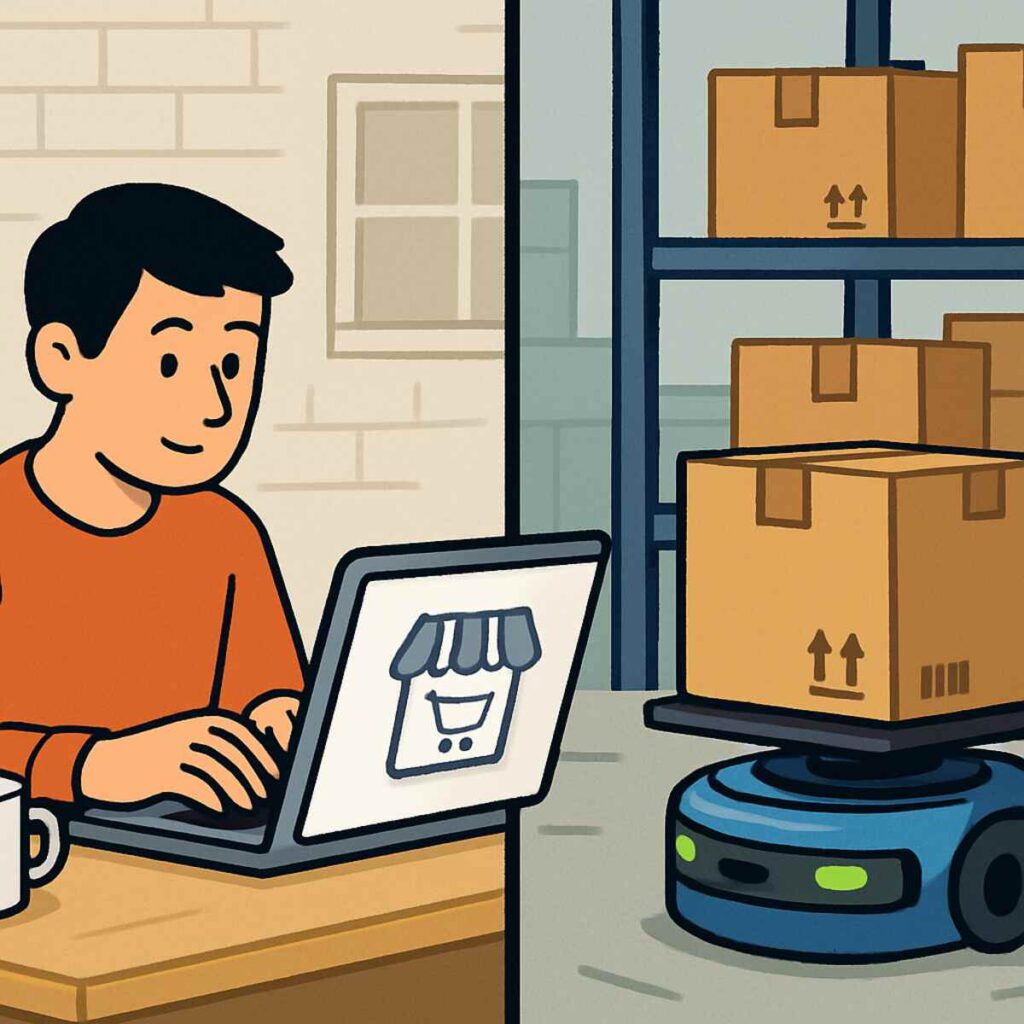
Imagine you could launch a modern brand today without ever touching a piece of fabric, renting a warehouse, or waiting in a long line at the post office. That is the exact promise of dropshipping for beginners, a business model where you sell items online but a third-party supplier handles all the physical inventory. Deciding to start a Shopify store gives you a beautiful digital storefront, but you still need a reliable way to fill those virtual shelves with high-quality goods. Choose the best dropship app for shopify.
Building this freedom-focused business looks simple on social media, yet the reality involves navigating the messy middle of logistics. Finding trustworthy suppliers who offer popular lifestyle items—like durable phone cases or clever kitchen gadgets—is known as product sourcing, and doing it manually quickly becomes overwhelming. According to industry surveys from major e-commerce platforms, new entrepreneurs actually struggle more with securing reliable supply chains than they do with website design.
How do you connect a customer browsing on their phone to a physical warehouse sitting thousands of miles away? Think of an app as a highly efficient digital bridge, acting like a 24/7 ghost employee who tells the supplier exactly what to pack the moment an order comes through. This crucial step is called fulfillment, which simply means the process of getting the purchased item from a storage shelf directly to your buyer’s front door. Selecting the best dropship app for Shopify means finding the right digital assistant who won’t lose orders or keep your customers waiting a month for a birthday present.
Evaluating the crowded marketplace comes down to mastering three essential pillars: shipping speed, upfront cost, and ease of use. Because nobody wants to risk their brand reputation on unverified software, we have tested the top tools available so you can skip the expensive trial-and-error phase. The top applications do the heavy lifting for you, allowing you to focus on making sales instead of stressing over shipping labels.
Why Your Shopify Store Needs a “Digital Middleman”
You wake up to 50 new orders, but instead of celebrating, you realize you now have to manually type 50 different names and addresses into your supplier’s website. This administrative headache is exactly why automating order fulfillment for shopify stores is practically required to run a successful business. Rather than doing everything yourself, the right application functions as a “ghost employee”—a 24/7 digital assistant that tells the warehouse exactly what to pack the second a customer clicks checkout.
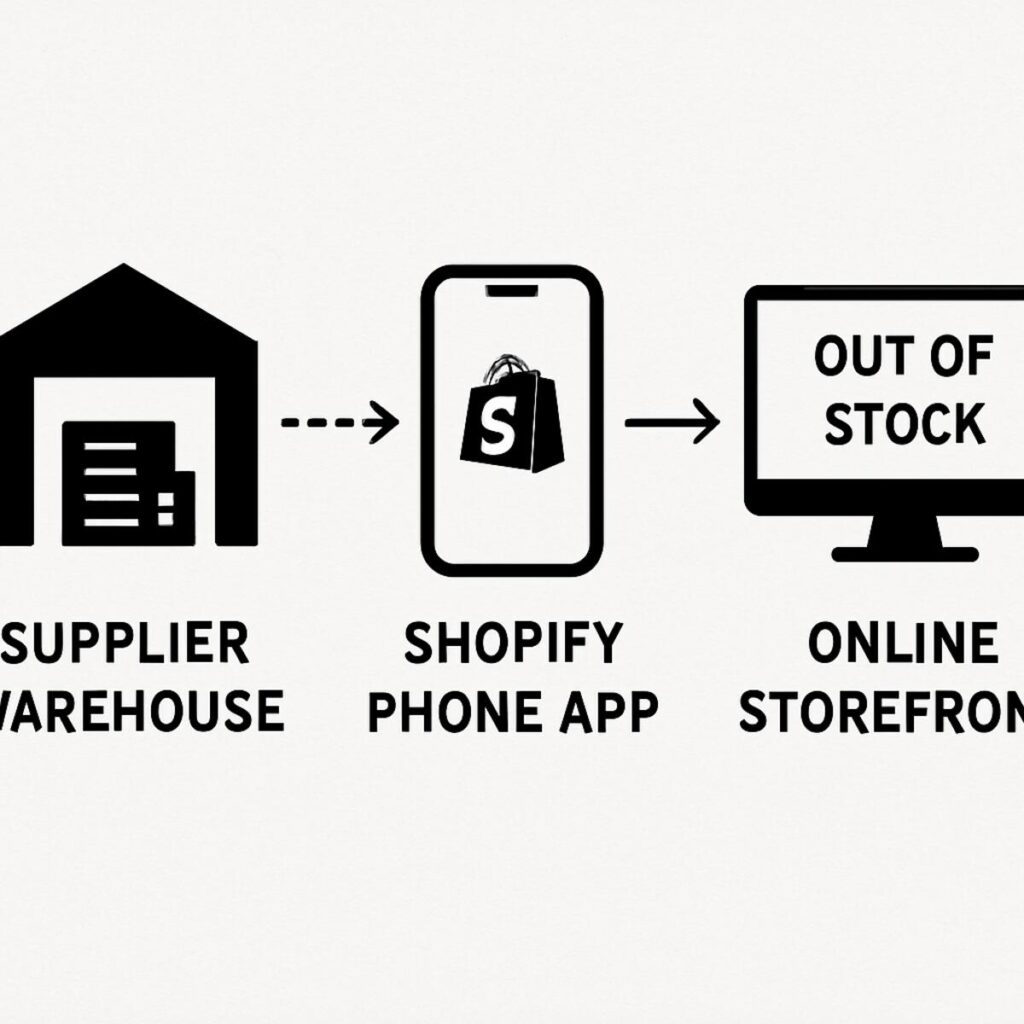
Connecting this digital middleman to your store introduces a crucial superpower called data syncing. Think of data syncing as a continuous conversation between your website and the warehouse, designed to prevent the nightmare of accidentally selling a popular blue shirt that no longer exists in stock. By taking over the heavy lifting, good dropshipping software manages several critical background tasks:
- Copying product details directly from the supplier to your storefront.
- Updating stock levels in real-time so you never sell unavailable items.
- Sending customer addresses instantly to the warehouse to prevent costly “human error” like typos in shipping destinations.
Offloading these manual steps easily saves you more than two minutes per order, giving you the freedom to focus on marketing and customer service instead of staring at logistics spreadsheets. With these tools handling the daily grunt work, finding the perfect match for your store requires looking at how different platforms stack up against the “Big 3” Evaluation Framework: Cost, Speed, and Quality.
The “Big 3” Evaluation Framework: Cost, Speed, and Quality
Most beginners look straight at the price tag when searching for the best dropship app for shopify, but the “Free Plan” illusion is a dangerous trap. Many applications cost nothing to install but make their money by baking hidden markups into the actual product cost. If an app saves you twenty dollars a month in subscription fees but charges three dollars extra per phone case, you will lose money after just a few sales.
Customer patience runs thin today, making fast delivery your next critical priority. You should aim for a “shipping sweet spot” of under twelve days to keep buyers happy and avoid a flood of refund requests. Achieving this requires looking at an app’s shipping zones, which are simply the geographic regions a specific warehouse can reliably reach within a set timeframe. If your customers live in the United States, choosing software with domestic fulfillment centers will drastically outperform an app shipping single items across the ocean.
Evaluating dropshipping supplier reliability is the final piece of the puzzle to protect your brand from selling low-quality items. This requires knowing the difference between basic AliExpress connector apps and curated supplier networks. While basic connectors link you to thousands of unvetted overseas factories with zero quality control, a true supplier network acts like an exclusive club that hand-picks trustworthy vendors and enforces strict standards.
Your final choice will come down to balancing these margin, shipping, and quality factors against your specific business goals. Many new sellers prioritize massive product variety and the lowest possible costs when first testing the e-commerce waters. If your strategy relies on exploring thousands of affordable items to find a winning product, your journey naturally starts with DSers: The High-Volume Champion for AliExpress Enthusiasts.
DSers: The High-Volume Champion for AliExpress Enthusiasts
Finding the best dropship app for shopify often leads beginners straight to the massive catalog of AliExpress, but manually clicking through individual listings to fulfill customer orders is a quick way to burn out. When you wake up to fifty new sales, you do not want to spend your morning copy-pasting fifty different home addresses into a checkout page. DSers stepped in to solve this exact bottleneck, earning its title as the official AliExpress partner by acting as a high-speed, automated assistant between your store and overseas warehouses.
To eliminate that tedious manual labor, the app equips your store with three specific features designed to save you hours of screen time:
- Supplier Optimizer: This tool automatically scans the marketplace to find the cheapest, most reliable factory selling the exact same product you are already offering, instantly maximizing your profit margins.
- Bulk Order processing: Instead of buying items one by one, you can click a single button to place 100 orders in under a minute, effortlessly sending your customers’ shipping details to the right factories.
- Bundle mapping: If you want to sell a “yoga starter kit” containing a mat from one vendor and a water bottle from another, this feature automatically splits the order behind the scenes so both suppliers get paid correctly.
Behind the scenes, the platform also protects your business as your sales volume grows. When you start making dozens of purchases a day, basic marketplaces sometimes flag your account for unusual activity, causing a frustrating “shadow ban” that stops your orders from going through. DSers bypasses this headache by allowing you to link multiple buyer accounts, seamlessly rotating them while you utilize their bulk order processing tools for shopify. Furthermore, it utilizes “bulk mapping,” which acts like a safety net; if your primary supplier runs out of a trending blue phone case, the app instantly reroutes the order to your pre-selected backup vendor so your customer never experiences a delay.
While this massive inventory system excels at keeping product costs low, it still fundamentally relies on overseas fulfillment. Those affordable prices often come with the heavy trade-off of three-week delivery times, which can quickly frustrate modern online shoppers. If your strategy depends on quick delivery to build trust, you will need to explore aliexpress alternatives for faster shipping, bringing us to Spocket: Winning the Game with US and EU Faster Shipping.
Spocket: Winning the Game with US and EU Faster Shipping
If the thought of your customers waiting a month for a package makes you nervous, you are not alone. Long delivery windows often lead to anxious emails and refund requests, which is why many store owners rely on a strategy called “local sourcing.” Instead of shipping a simple coffee mug across the globe, local sourcing means partnering with a warehouse located in the exact same country as your buyer. Spocket was built specifically for this approach, functioning as a curated network that connects you with top rated shopify dropshipping suppliers primarily located in the United States and Europe.
Stepping away from massive overseas catalogs allows you to focus heavily on the overall customer experience. Spocket avoids the race to the lowest price, positioning itself as a premium option for sellers who want to build brand loyalty. It upgrades your store’s operations by delivering three major advantages:
- 2-5 Day Shipping: Moving products down the highway instead of across the ocean is the most effective method for reducing shipping times for international dropshipping, instantly cutting a 21-day wait down to just three days.
- Branded Invoicing: When a shopper opens their package, they find a physical receipt printed with your logo and a custom note. This completely hides the dropshipping middleman, making your business look like a traditional, fully stocked boutique and encouraging repeat buyers.
- Vetted Suppliers: You never have to cross your fingers and hope the product is actually good. Spocket forces every factory to pass a strict quality control test before they are allowed to sell on the application.
Utilizing these domestic warehouses naturally means your upfront product costs will be higher than they are on basic marketplaces. To maintain a healthy profit margin, you must charge a higher retail price, which requires building a highly professional store design that justifies the premium cost to your visitors.
Navigating this trade-off between cheap inventory and fast delivery is a major decision for new e-commerce entrepreneurs. If you are currently torn between these two vastly different business models, your next step is exploring DSers vs Spocket: Choosing Between Global Variety and Local Speed.
DSers vs Spocket: Choosing Between Global Variety and Local Speed
Deciding whether to build a massive bargain catalog or a premium boutique is the first major milestone for your new store. Approaching a DSers vs Spocket comparison for beginners requires evaluating “marketplace curation.” Think of curation like a personal shopper for your business; instead of you manually sifting through millions of random items, the app pre-selects suppliers based on strict quality rules. DSers operates like a sprawling open mega-mall with endless choices and rock-bottom prices. Spocket, on the other hand, acts as a highly curated boutique that carefully filters out unreliable factories before you ever see their catalog.
Finding the absolute best dropship app for shopify ultimately depends on the specific expectations of your target buyers. Breaking down the core features helps clarify exactly which path your business should take:
- 1. Product Variety: DSers easily wins this category, offering millions of inexpensive items ranging from simple phone cases to trendy kitchen gadgets.
- 2. Shipping Speed: Spocket takes the lead, ensuring your domestic buyers receive their premium goods in just a few days rather than a few weeks.
- 3. Profit Margins: DSers usually wins the profit battle because overseas manufacturing costs are so low, giving you maximum room to mark up the retail price.
Surprisingly, you are not actually forced to lock yourself into just one of these platforms. Many successful entrepreneurs run both apps side-by-side, using Spocket to deliver high-quality core products fast, while utilizing DSers to offer cheap, trendy accessories. Mixing both tools helps you protect your brand’s reputation while keeping your overall inventory costs manageable. Once you feel comfortable selling pre-made physical goods, you might start wondering how to put your own custom designs on clothing. That exact creative leap leads us directly into Printful vs Printify: Turning Your Art into a Brand Without Inventory.
Printful vs Printify: Turning Your Art into a Brand Without Inventory
Imagine launching a clothing line without ever having to guess which sizes will sell out and which will gather dust in your garage. That is the magic of Print-on-Demand (POD), a specific type of dropshipping where blank items—like t-shirts, yoga mats, or coffee mugs—are only customized after someone actually pays for them. Because nothing is physically created until a sale happens, you completely eliminate the risk of paying for overstocked inventory. To make this work visually, these platforms offer “mockup generation.” This feature acts like a digital dressing room, automatically pasting your flat artwork onto professional photos of real models so your store looks instantly credible to shoppers.
The actual automated process runs behind the scenes like a highly efficient 24/7 assistant. Once you install your chosen app, the POD Workflow follows four simple steps:
- Upload Design: You place your custom artwork onto a digital blank product.
- Customer Buys: A shopper visits your store and purchases the customized item.
- Item is Printed: The app instantly alerts the facility to manufacture that specific piece.
- Item is Shipped: The facility packages and mails the final product directly to your buyer under your brand name.
When searching for the best print on demand apps for shopify to handle this workflow, the decision usually comes down to two industry giants: Printful and Printify. Though they seem identical on the surface, their business models are completely different. Printful uses an “All-in-one” approach, meaning they own and operate their own factories. This guarantees strict quality control and consistent colors, but their base items cost a bit more. Printify operates on a “Network” model, acting more like a travel agency that connects you to hundreds of independent print shops around the world. This structure forces suppliers to compete, offering you lower costs and a wider variety of unique products, though print quality can sometimes vary between different facilities.
Deciding between these two platforms ultimately depends on whether you prioritize absolute brand consistency or cheaper production costs. To figure out which route makes sense for your budget, plugging their baseline costs into a dropshipping profit margin calculator for ecommerce can quickly reveal exactly how much cash you will earn per shirt. Selling custom clothing is a fantastic way to build a loyal audience, but everyday apparel usually yields smaller financial returns per individual item. Once you master the basics of selling standard physical goods, you might be ready to explore fewer sales with massive payouts, which leads us directly to Sourcing High-Ticket Items to Triple Your Margins.
Sourcing High-Ticket Items to Triple Your Margins
Does the thought of managing hundreds of tiny daily orders give you a headache? Instead of trying to convince twenty different people to buy a low-margin phone case just to make a hundred dollars, you can generate that exact same profit from a single customer buying a premium product. This strategy, known as high-ticket dropshipping, focuses on selling expensive, high-quality goods like home saunas or electric standing desks. By shifting your store’s focus from volume to value, you drastically reduce the number of daily transactions you have to juggle while still safely growing your bottom line.
Transitioning into this premium space requires a different approach to finding your products. When sourcing high-ticket items for dropshipping, you will quickly encounter a rule called MAP pricing, which stands for Minimum Advertised Price. Think of MAP as a strict manufacturer rule that prevents any store from selling their luxury massage chair below a specific price point, ensuring you and every other seller maintain a healthy profit margin without starting a race to the bottom. Because product quality is non-negotiable at this tier, selecting the best dropship app for shopify becomes less about accessing massive overseas catalogs and more about finding a tool that connects you exclusively with vetted, high-end domestic suppliers.
Stepping up to a thousand-dollar transaction naturally means your buyers will expect a white-glove experience. Customers purchasing expensive home upgrades demand prompt answers to their emails, crystal-clear shipping timelines, and exceptional support if a piece arrives damaged. Because the financial stakes are so much higher per order, accidentally selling a high-end item that is secretly out of stock turns into an expensive refund hassle rather than a minor inconvenience. Preventing that catastrophic scenario requires airtight communication between your store and your suppliers, bringing us to the “Sold Out” nightmare: how to sync inventory across 10 suppliers.
The “Sold Out” Nightmare: How to Sync Inventory Across 10 Suppliers
Imagine waking up to a $150 yoga mat sale, only to discover your supplier actually sold out of that exact item three days ago. This common nightmare forces you to send an awkward apology email and issue a frustrating refund, hurting both your reputation and your wallet. Effective shopify inventory management prevents this exact scenario by creating a direct, automated link between your store and the supplier’s warehouse. Instead of manually clicking through websites to check if products are still available, the right dropshipping app acts as a 24/7 digital assistant that constantly monitors the warehouse shelves for you.
Managing multi-supplier inventory on shopify becomes incredibly simple when you use a single dashboard to consolidate your operations. You can seamlessly track products from ten different suppliers at once without ever leaving your main Shopify screen. To protect your business while you sleep, top dropshipping apps rely on three crucial auto-sync features:
- Stock level updates: The app matches your store’s item count exactly to what the warehouse actually holds.
- Price change alerts: If a supplier raises their cost on a kitchen gadget, your store price updates automatically so you never sell at a loss.
- Automatic product deactivation: When an item runs out completely, the system instantly hides the buy button.
Because you no longer have to worry about accidentally selling phantom products, you earn back countless hours of your week. Your store now operates securely on autopilot, confidently displaying accurate prices and availability to every shopper. With this reliable foundation securely in place, you are perfectly positioned to handle rapid growth by scaling with bulk order tools and automated fulfillment.
Scaling with Bulk Order Tools and Automated Fulfillment
Getting your first few sales is thrilling, but manually typing customer addresses into a supplier’s website quickly loses its charm. When your weekend side hustle suddenly generates dozens of daily purchases, that excitement can easily turn into severe admin fatigue. Successfully scaling a shopify store with automated sourcing means shifting your focus from tedious data entry to actually growing your brand. You need a system that handles the heavy lifting so you do not spend your evenings copy-pasting shipping details.
The secret to managing this sudden volume lies in utilizing bulk order processing tools for shopify. Instead of paying your supplier for 50 individual phone cases in 50 separate transactions, these tools let you group everything together. It is exactly like checking out at a grocery store: you put all your customers’ separate orders into one massive digital cart and pay the supplier with a single click. This simple shift turns two hours of mind-numbing administrative work into a two-minute task, freeing you up to design new ads or hunt for your next winning product.
Beyond just placing the orders, your digital app also handles the critical post-purchase communication. Once the warehouse ships the package, the system automatically grabs the tracking number and emails it directly to your customer, practically eliminating those frustrating “where is my order?” messages. However, even the most efficient automation cannot fix a terrible product or a notoriously slow warehouse. Before you trust a partner with hundreds of automated daily purchases, you need to know exactly how to vet a supplier in 5 minutes using the “test order” checklist.
How to Vet a Supplier in 5 Minutes Using the “Test Order” Checklist
Sending a product to a customer sight unseen is a massive leap of faith. A supplier might have amazing photos, but if they ship a flimsy phone case in a crushed envelope, your store’s reputation takes the hit. To protect your brand and figure out how to evaluate dropshipping supplier reliability, you must perform a “test order.” This simply means buying your own item as a regular shopper. It lets you see exactly what your customer sees when they open the box, successfully filtering out bad partners before they ruin your hard-earned customer ratings.
When that package finally arrives on your doorstep, put it through a rapid-fire quality control check to learn how to find high quality dropshipping products consistently. You should not just glance at the item; you need to evaluate the entire unboxing experience using the 5-Point Test Order Checklist:
- Packaging quality: Is the mailer secure and presentable, or barely taped together?
- Shipping time accuracy: Did the package arrive within the window the supplier promised?
- Product durability: Does the item actually survive a few days of normal, everyday use?
- Communication speed: Send a “fake” question to their support team to see if they reply quickly.
- Return address inclusion: Is it crystal clear where unhappy customers need to send their returns?
Passing this simple evaluation proves that a supplier respects your business. Taking five minutes to verify these details saves you from processing dozens of frustrating refunds later in the month. Even if a partner aces this quality check, however, you might notice that getting packages from overseas takes a bit too long for modern consumer expectations. Fortunately, there are practical strategies you can use for reducing international shipping times without moving warehouses.
Reducing International Shipping Times Without Moving Warehouses
Even if your supplier passes the test order, a great product won’t save you if your customer waits a month to receive it. A major challenge in e-commerce is reducing shipping times for international dropshipping without abandoning affordable overseas suppliers. For years, beginners relied on “ePacket,” a budget postal option from China. Today, ePacket is largely outdated and routinely causes unpredictable delays. To keep buyers happy, you must upgrade how those products travel.
Finding better routes means paying attention to the specific shipping lines your supplier uses at checkout. When searching for aliexpress alternatives for faster shipping, bypass standard postal services entirely. Instead, look for dedicated commercial lanes that group packages and fly them directly to your customer’s country. Always filter your suppliers by these superior shipping methods:
- AliExpress Selection Standard
- YunExpress
- USPS (for local US)
That handover to a local carrier introduces “last-mile delivery,” which is simply the final leg of the journey right to the customer’s doorstep. A package might cross the ocean quickly, but if it gets handed off to a slow regional courier, your buyer still waits. Premium shipping lines succeed because they seamlessly transfer items like phone cases directly to trusted local carriers, cutting weeks off the total wait.
If international transit remains too slow as your business grows, you can eventually utilize a 3PL (Third-Party Logistics provider). Think of a 3PL as a local middleman warehouse; you buy a small batch of your best-sellers, store them stateside, and the facility ships them locally within days. Naturally, upgrading your shipping methods or renting local shelf space costs extra per order. To determine if these faster options still make financial sense, you need to explore The Dropshipping Profit Margin Calculator: What You Actually Keep.
The Dropshipping Profit Margin Calculator: What You Actually Keep
Selling a yoga mat for $30 when your supplier charges $10 feels great, but that $20 difference is just an illusion. This initial number is your gross profit, meaning the money left over before your business expenses kick in. Your true goal is the net profit: the actual cash you get to put in your pocket at the end of the day.
Before you count your earnings, you must account for the invisible tolls taken out of every sale. Every time a customer uses a credit card, payment processors take a small cut, known as transaction fees. Add in the money spent on social media ads to acquire that buyer, and your margins shrink quickly. Using a dropshipping profit margin calculator for ecommerce helps track exactly how these hidden costs eat into your earnings so you never price items too low.
The perfect price tag also relies on understanding basic human psychology. You must charge enough to cover your marketing, but you can use psychological pricing to make the cost feel lighter to the buyer. Changing a price from $20.00 to $19.99 creates a subconscious trigger that makes the item seem like a much better deal. When paired with smart shopify inventory management to ensure you aren’t paying for ads on out-of-stock products, these tiny pricing tweaks keep your margins incredibly healthy.
Once your store consistently generates predictable, real profit instead of just empty sales volume, you gain the financial freedom to scale. Earning a reliable income from other people’s generic products is a fantastic foundation that proves your business model works. With those financial basics mastered, you are finally ready to take the next step from Retailer to Brand: Moving Toward Private Label Services.
From Retailer to Brand: Moving Toward Private Label Services
Hitting the milestone of consistent daily sales proves your marketing works, but shipping generic products in flimsy bags limits your growth. When a buyer receives a plain gray mailer with a confusing overseas label, it drastically lowers the item’s perceived value—how much they subconsciously believe the product is actually worth. To charge premium prices, you must transition from selling commodities to offering a true brand experience. This involves “white label” strategies, which mean putting your brand name on a generic item, and “private label” tactics, which involve customizing the packaging or the product itself. By utilizing private label dropshipping services for shopify, you easily swap cheap packaging for an unboxing experience that makes a standard yoga mat feel like a luxury fitness accessory.
You don’t need to lease a physical warehouse to execute this evolution into a recognized brand. When scaling a shopify store with automated sourcing, your fulfillment app simply acts as your hidden branding team. Instead of merely forwarding an order to a factory, these advanced tools allow you to implement simple but powerful branding steps:
- Custom packaging: Upgrading from plain plastic mailers to premium branded boxes.
- Logo inserts: Adding branded stickers or printed product care cards inside the package.
- Personalized thank you notes: Including friendly messages that build connection and encourage repeat purchases.
A distinct visual identity is exactly what turns a basic storefront into a real, sellable business asset. Competitors can copy the items you sell, but they cannot steal the customer loyalty generated by professional presentation. Upgrading your unboxing experience is a crucial milestone, but what if you haven’t reached those consistent daily sales and lack the capital for custom boxes? If you need to test the waters before investing in brand aesthetics, your next step is exploring Zero-Budget Starts: The Best Free Dropshipping Apps for Beginners.
Zero-Budget Starts: The Best Free Dropshipping Apps for Beginners
The hardest part of launching your first online store is managing the upfront costs, which is why starting with zero-dollar app fees is a massive relief. Many popular tools operate on a “freemium” model—meaning the basic software is completely free to use, but you pay to unlock premium features later. Utilizing free dropshipping apps for shopify beginners allows you to test out different products, like phone cases or kitchen gadgets, without risking your own bank account. However, these free tiers usually come with a catch known as “order limits.” Think of an order limit as a monthly quota; the app might only let you automatically process 50 customer purchases a month before asking you to upgrade.
Finding the best dropship app for shopify on a tight budget comes down to picking the right platform for your specific goals. Here are the top free tools to launch your store today:
- DSers Free Plan: Best for massive variety. It connects you to thousands of AliExpress suppliers, though you are limited to a certain number of automated orders.
- CJ Dropshipping: Best for avoiding monthly fees entirely. They charge you only for the product and shipping costs, with zero subscription fees required to use the app.
- Zendrop (Free Tier): Best for reliable shipping. The free version grants access to a smaller, curated list of high-quality products to get your store off the ground safely.
Sticking to a free plan makes perfect sense for your first few sales, but eventually, the manual work will slow you down. Once you consistently hit your monthly order limit or spend hours typing in customer addresses, upgrading to a paid plan easily pays for itself by buying back your valuable time. As your store grows, you might even find yourself sourcing a yoga mat from one free app and a water bottle from another. When that happens, you will quickly need a strategy for Managing Multi-Supplier Chaos Without Losing Your Mind.
Managing Multi-Supplier Chaos Without Losing Your Mind
Imagine your customer buys a phone case and a charging cable from your store, but the case arrives on Tuesday and the cable arrives a week later. This scenario is called “split-shipping”—where items from the same order are shipped separately because they come from entirely different suppliers. When managing multi-supplier inventory on shopify, this is the most common hurdle beginners face. Instead of letting buyers panic and demand a refund because they think half their purchase is missing, you must proactively manage their expectations. The easiest fix is adding a clear note to your store’s “Shipping Policy” page explaining that multi-item orders may arrive in separate packages, instantly saving you hours of stressful customer service emails.
If you want to avoid sending multiple boxes altogether, the next step in mastering shopify inventory management is utilizing a technique called “order consolidation.” Think of this process like hiring a personal shopper at a mall; instead of each individual store mailing you a separate bag, the shopper gathers everything into one big box before handing it to the post office. Professional sourcing agents perform this exact service. They collect your customer’s chosen products from various manufacturers, package them neatly together in a single parcel, and ship them out simultaneously, creating a much cleaner unboxing experience.
Coordinating these independent agents yourself can quickly feel overwhelming when you are just starting out. Fortunately, you do not actually need to hire outside logistics teams or rent warehouse space to achieve that single-box delivery. Specialized platforms exist that act as your consolidated warehouse, automatically gathering your different products before they hit the mail. To solve this multi-supplier puzzle effortlessly, it is time to look at CJDropshipping: The All-in-One Alternative to AliExpress.
CJDropshipping: The All-in-One Alternative to AliExpress
Most new store owners start with standard overseas suppliers, but quickly realize that a four-week wait time destroys customer trust. If you want to solve this, CJ Dropshipping stands out as one of the top aliexpress alternatives for faster shipping. Instead of merely listing suppliers, this platform operates its own global warehouses. Global warehousing simply means they store popular products in facilities located much closer to your buyers, such as their US warehouse. This setup allows you to offer true 3-7 day delivery times without ever having to touch a cardboard box yourself.
Beyond just storing goods, this platform provides hands-on support that makes it the best dropship app for shopify if you want to build a recognizable brand. When you connect your store, you get access to CJ’s unique services:
- Warehouse storage: Pre-stock your winning items in local regions to guarantee lightning-fast shipping.
- Professional product photography: Request custom photos and videos of products so your store stands out from competitors using generic supplier images.
- Personal sourcing agents: If you cannot find a specific item, a dedicated human agent will actively hunt it down from factories and negotiate prices for you.
Partnering with a sourcing agent entirely transforms how you run your daily operations. You no longer have to worry about the logistics of finding and packing goods, which frees you up to focus purely on marketing. With the right tools handling the heavy lifting behind the scenes, you can confidently execute Your 30-Day Launch Plan: From App Install to Your First Sale.
Your 30-Day Launch Plan: From App Install to Your First Sale
You started this journey wondering how to bridge the gap between a blank Shopify canvas and a fully functioning online storefront. Now, you have the exact tools to make that connection without ever touching a piece of packing tape or managing a warehouse. The secret to avoiding “analysis paralysis” is simply making a choice based on your immediate needs: if you want lightning-fast local delivery to build instant trust, go with Spocket. If you want endless catalog variety and the lowest possible entry costs, go with DSers.
Pick one app and commit to it, remembering that perfection is the enemy of progress. Your initial goal isn’t to build a flawless global empire on day one; your first 10 sales are strictly for learning. This early phase teaches you exactly how to find high quality dropshipping products that actually resonate with your audience, while helping you understand the rhythm of customer service and order fulfillment.
To keep your momentum strong and bypass the overwhelm, follow this stress-free path to your first sale:
- The 30-Day Checklist: Week 1 (Setup) – Install your chosen app, connect it to Shopify, and configure your basic shipping zones.
- The 30-Day Checklist: Week 2 (Product Research) – Import 5 to 10 items, rewrite their descriptions to sound human, and set your profit margins.
- The 30-Day Checklist: Week 3 (Store Design) – Build a clean, trustworthy storefront with clear return policies and easy navigation.
- The 30-Day Checklist: Week 4 (Ads/Launch) – Remove your store password, launch a low-budget social media campaign, and test the waters.
Once you hear that famous Shopify notification ring and those initial orders flow seamlessly to your supplier, your role fundamentally shifts. You transition from a store builder to a brand owner, turning your attention entirely toward marketing and scaling a shopify store with automated sourcing running quietly in the background. Your chosen app becomes your silent partner, doing the heavy lifting while you focus entirely on growth.
E-commerce success relies heavily on putting the right logistics in place. The digital shelves are ready, global suppliers are standing by, and automated assistants are available to handle fulfillment. Choose a preferred app, import the first product, and begin building a sustainable online storefront.