


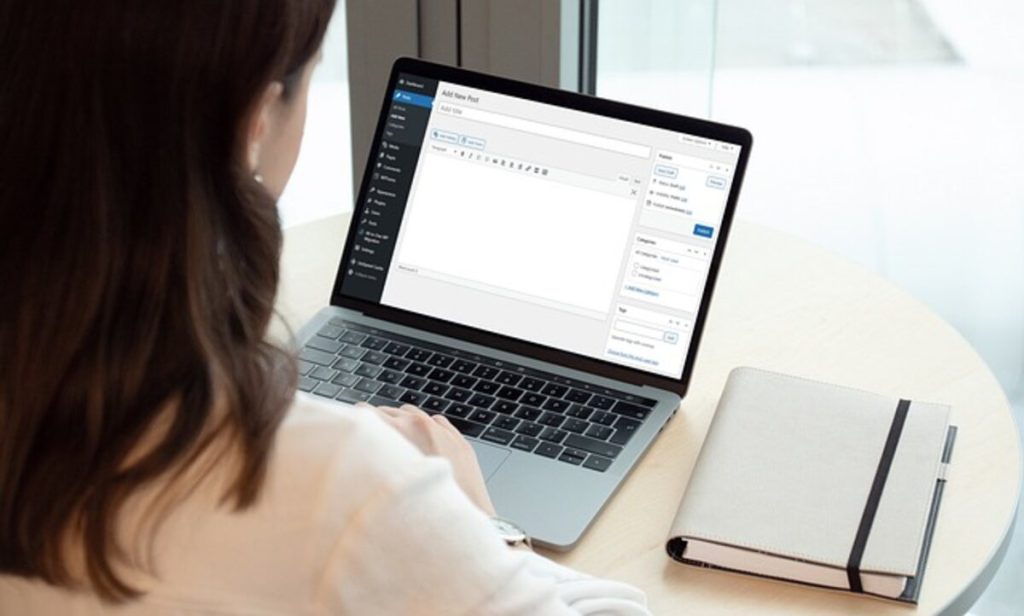
WordPress installation is a breeze, but you still have a way to go before relaxing. Most of your effort will go into the actual writing. However, there are several configurations you should adjust first.
You’ll create your methods in time, just like every seasoned blogger. These are the steps I take before I release any new material.
Alter your blog’s title and description.
Your blog’s title should include your domain name and relevant keywords. The slogan for your blog should be a short sentence that sums up its purpose.
Modify Your RSS Feeds
In most cases, readers will choose to subscribe to your blog so that they may stay informed of new posts without actually having to visit your site. They utilize feed readers because of its convenience; therefore, ensure the complete article is included when they visit your site. If you don’t provide them with the whole story but instead just an extract, they won’t be very impressed and might even decide to cancel their subscription.
Edit your details
They claim using the default name (admin) can make you appear more like a thing than a person, which can hurt your credibility as a blogger. If you use your real name in your writing, your readers will see that you are just like them.
Regulate who can comment and how
Moderating comments before they go live on your blog is an excellent way to prevent spam, but you shouldn’t be so cautious that people stop leaving comments altogether. Your frequent commentators will rapidly become bored if you make them wait until you come online to submit their remarks. The “Comment author must have a previously approved comment” option should be chosen. That way, you can restrict additional comments to only those who have already had one authorized by you.
Remove the test and any metadata.
A “Hello World!” post will automatically be published upon the first activation of WordPress. This is only an example for novice bloggers and may and should be removed immediately.
WordPress also includes a handy sidebar for displaying metadata. In this case, a signup/login form and an HTML validator. This, too, needs to go.
Make your favicon.
Short for “favorite icons,” favicons are the images displayed to the left of a website’s URL in the address bar and the website’s name in a bookmarks or favorites menu. Using a unique icon for your site helps it stand out. If you’ve made your image in jpg, png, or gif format, you may quickly find a website that will make it for free. Google is a helpful tool.
Make a message board.
All reliable blogs have methods for readers to contact the authors. Ensure your readers know how to contact you if they have any questions or concerns. Commercial uses include link exchanges with other webmasters and selling advertising space on your site. In today’s blogging environment, contact forms are no more a nice to have; they’re a need.
Begin by making a FeedBurner account.
Using Feedburner to “burn” your RSS feed streamlines the process for your readers. It will allow your readers to subscribe through email and change your general feed address to a Feedburner URL.
Discover your API key.
Without a reliable spam filter, it’s hard to maintain a WordPress blog in the modern era. The WordPress package already includes the finest spam protection available, Akismet. Locating your API key is all that’s needed to initiate security. Your API key will be sent to the email address you provide when creating your WordPress account. Your WordPress username can be found on your profile page. Your blog will be secure from spammers after you submit your API key to Akismet.
Build a robots.txt document.
This plain text file is crucial regarding how search engines index your site. It allows you to prevent search engine crawlers from accessing material such as admin pages, category pages, and others. It’s handy for avoiding duplicate content penalties that could hurt your site’s rankings.
Media Playbook for Football.
Read also: How To Cope With15462 The Pain Of A Broken Coronary Heart.