

You interact with an electrician’s work the moment you wake up and hit the light switch, yet nearly all of their craftsmanship remains completely invisible. Hidden behind your drywall and tucked beneath your floors lies a complex skeleton of copper and plastic that powers your daily life. Because this system operates quietly out of sight, many people misunderstand exactly what an electrician does on a typical job site. The reality goes far beyond simply swapping out a broken dimmer switch or installing a new ceiling fan. Find the best electrician Highlands Ranch CO.
To grasp the true nature of the trade, it helps to picture the energy flowing through your walls as water moving through a plumbing network. In this familiar analogy, voltage acts as the water pressure pushing the current, while the wires serve as the actual pipes carrying the load. Managing this invisible force requires strict professional oversight because a sudden surge in pressure can easily overwhelm a weak pipe. Electricians carefully calculate exactly how much “pressure” every wire can safely handle before they ever pick up a tool.
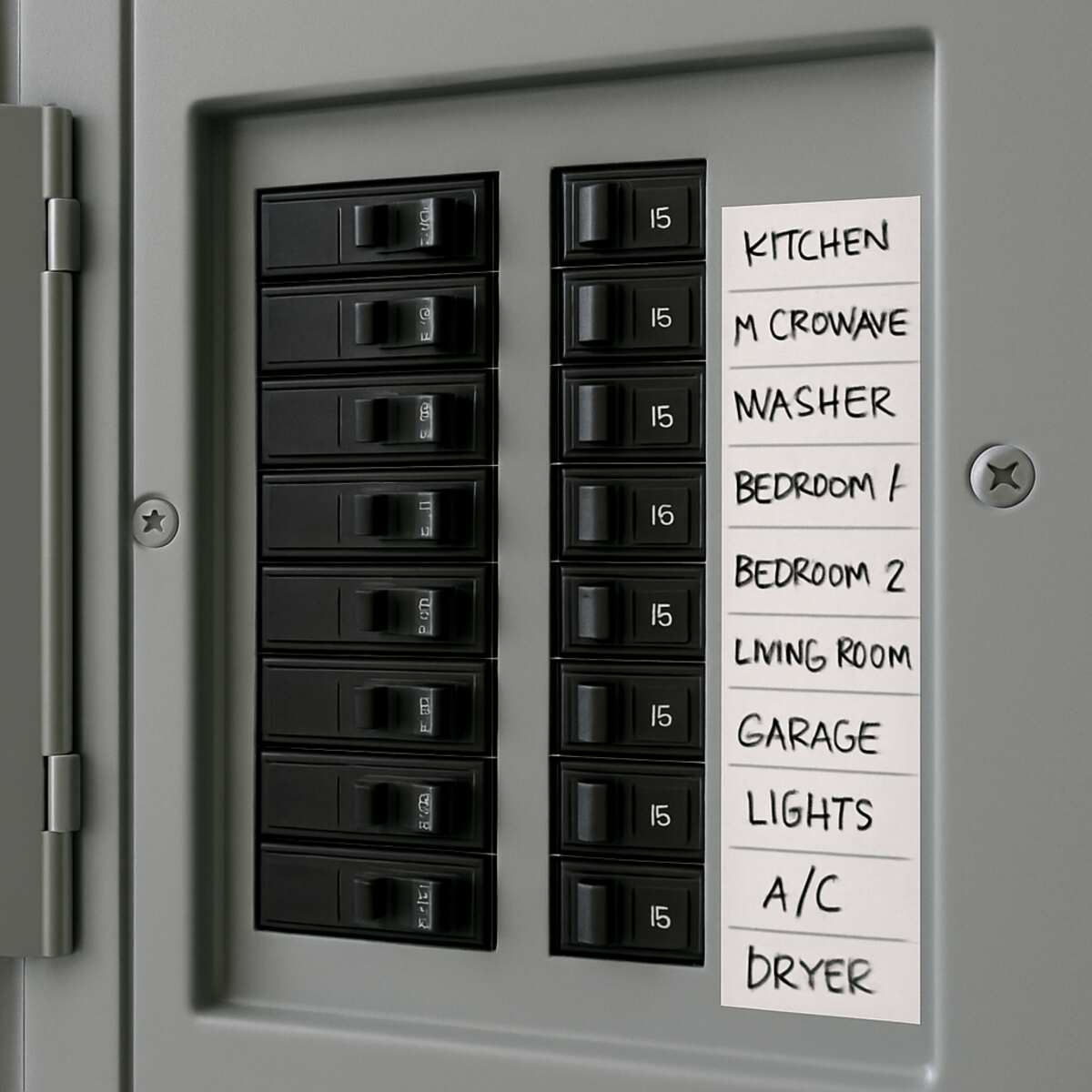
This careful planning highlights the massive difference between what you experience as a homeowner and the underlying system-level design. While you simply plug in a coffee maker and expect it to brew, a professional has already mapped out the logic dictating how that specific outlet draws power from the main breaker panel, which acts as the central brain distributing energy throughout your home. Delivering reliable electrical services means acting as a structural architect for energy, ensuring the kitchen does not suddenly lose power just because the microwave and toaster run at the same time. These professionals design the hidden pathways that keep modern homes functioning smoothly.
Sometimes, even well-designed systems develop hiccups, which shifts the worker’s role from a planner to a highly trained detective. If an older outlet starts smelling faintly like smoke, a homeowner might just stop using it, but a professional must trace the hidden hazard back to its source. In practice, industry data reveals that a significant portion of an electrician’s daily responsibilities involves troubleshooting mysteries that the average person cannot even see. They use specialized meters to diagnose faulty wiring long before those minor issues can turn into dangerous household fires.
Guiding all of these design and detective tasks is a rigid set of safety standards known as the National Electrical Code (NEC). According to the agencies that maintain these rules, the NEC serves as a universal rulebook, ensuring a house wired in Maine is just as safe as a home built in California. When professionals pull permits and follow these strict codes, they are building a reliable shield against electrical accidents. This rulebook explains why certain upgrades require specialized knowledge and why DIY wiring is rarely a smart choice.
These common tasks reveal a profession built entirely around protecting your peace of mind. By moving past the outdated stereotype of someone who simply twists a few wires together, you gain a deeper appreciation for the people who keep the grid functioning safely. The true value of a skilled electrician lies in their ability to tame a dangerous natural force so you never have to think twice about it. Ultimately, they are the knowledgeable neighbors ensuring your home remains a safe haven long after you turn out the lights and go to sleep.
Residential Electrician Daily Responsibilities: Managing Your Home’s Pulse
Have you ever wondered exactly what an electrician does when they pull into your driveway? The core of residential electrician daily responsibilities revolves around the “service call,” which is an industry term for a professional visit to diagnose and fix a specific problem in your home. Instead of just blindly swapping out parts, these experts act as energy detectives to ensure the electricity flows safely from the street to your devices. They look at your home’s entire electrical nervous system, starting at the breaker box and tracing the invisible pathways behind your drywall.
Tracking down those hidden electrical pathways means professionals spend surprisingly little time standing comfortably in your living room. Much of their day involves crawling through sweltering attics or damp crawlspaces to inspect the heavy wiring that feeds your rooms. Up in those rafters, they frequently work with a junction box—a protective plastic or metal container where multiple wires connect to split power in different directions. Keeping these vital wire connections properly enclosed prevents accidental sparks from reaching your home’s wooden framing.
When things go wrong within those hidden wires, the resulting electrical repairs require immediate attention to prevent serious fire hazards. The most frequent culprit is a loose connection, which forces electricity to jump tiny gaps, creating a dangerous heat build-up behind your walls. Knowing when to call a professional keeps your home safe, especially if you notice any of these top 5 common residential service calls:
- Flickering lights that fluctuate when major appliances run.
- Dead outlets that refuse to provide power.
- Breaker trips that happen repeatedly in the same zone.
- Buzzing sounds coming from inside walls or switches.
- Burning smells near any electrical source.
Ignoring these warning signs can compromise your peace of mind, making the expertise of a licensed pro absolutely essential for residential safety. While fixing a smoldering wire in a cramped attic protects a single family, the scale of electrical work expands dramatically when moving outside the neighborhood.
Commercial vs. Industrial Electricians: Scaling Energy for Big Business
Leaving the quiet streets of a residential neighborhood, the scale of electrical work transforms when you enter a bustling grocery store or a massive manufacturing plant. The primary difference between residential and industrial electricians comes down to pressure and capacity, much like the difference between a basic garden hose and a high-pressure fire hose. While your home relies on standard 120-volt lines to comfortably run televisions and coffee makers, commercial spaces require significantly higher voltage to keep massive rooftop air conditioners and heavy machinery running without interruption. Managing these powerful currents requires an entirely different set of skills and strict safety protocols to ensure the sheer volume of electricity remains safely contained.
Because offices and retail stores have different physical layouts than houses, you will rarely see wires simply strung through wooden studs in these spaces. Instead, one of the most common tasks of a commercial electrician involves bending and installing conduit, which is a rigid metal piping system that houses and protects electrical wiring. If you look up at the exposed ceiling of a modern restaurant or warehouse, you will see these silver tubes tracing organized paths across the rafters. This heavy-duty metal shielding prevents wires from being damaged by forklifts, commercial renovations, or daily wear-and-tear, while also making it much easier to pull new cables through the building when a business expands.
Inside heavy manufacturing plants, the energy demands are so intense that standard power delivery methods simply cannot push enough energy to get the job done. To solve this, industrial experts use “three-phase power,” a specialized wiring method that sends overlapping waves of electricity to keep massive factory motors spinning smoothly. Imagine three people taking perfectly timed turns pushing a heavy wagon so that it never loses momentum, rather than one person pushing and pausing to catch their breath. Because working with these enormous, non-stop energy systems carries extreme risks, industrial professionals must wear heavily insulated, blast-resistant safety gear designed to withstand sudden bursts of high-voltage energy.
Whether a professional is outfitting an automotive assembly line or wiring a neighborhood bakery, the fundamental principles of completing a safe, reliable circuit remain the same. Even the most complex industrial grid starts with a carefully planned blueprint that maps out where every single wire, switch, and junction box must go. Before those massive factory motors can hum or the office lights can shine, an electrician must physically lay down the precise pathways that carry the current. On a residential scale, these precise pathways form the skeleton of a home during the installation of new electrical wiring and outlets.
Installing New Electrical Wiring and Outlets: Building the Skeleton of a Home
The true craftsmanship of a home’s electrical system happens long before the walls are even painted. When a professional is installing new electrical wiring and outlets in a fresh build or renovation, they are essentially designing the nervous system of the home. Every pathway is mapped out according to strict building codes to ensure power cords reach without stretching and heavy appliances have dedicated supply lines. This careful planning guarantees that the finished room is both incredibly convenient and inherently safe for everyday living.
Building this hidden network happens in two distinct stages to accommodate the wider construction process. The first phase is called “rough-in wiring,” which occurs while the wooden wall studs are still completely exposed. During this step, the electrician drills holes and weaves hundreds of feet of cabling through the skeletal framework, securing the protective plastic boxes that will eventually hold your switches. Weeks later, after the drywall is hung and painted, the professional returns for the “trim-out” phase, where they connect the visible faceplates, attach the fixtures, and finally bring the room to life.
While standard living rooms only require basic connections, spaces involving plumbing demand an entirely different level of protection. We all intuitively know that water and electricity are a deadly combination, which is why kitchens, bathrooms, and outdoor areas require a specialized device called a GFCI, or Ground Fault Circuit Interrupter. Think of this smart outlet as an ultra-sensitive gatekeeper; if it senses even a microscopic amount of electrical current leaking where it shouldn’t—like toward a wet sink or a puddle—it shuts off the power in milliseconds. This mandatory code requirement transforms a potentially life-threatening shock into nothing more than a harmless click.
Ensuring these protective measures function perfectly is a core part of residential electrical services, requiring meticulous testing before a homeowner ever moves in. An electrician uses diagnostic tools to verify that every newly pulled wire carries the correct voltage and safely directs any dangerous, excess energy away from the user. However, all these carefully planned circuits ultimately depend on the central hub that supplies their power. Once the walls are wired, ensuring the entire system can safely handle modern energy demands often requires upgrading old fuse boxes to modern panels, which act as the ultimate bodyguard of your home.
Upgrading Old Fuse Boxes to Modern Panels: The ‘Bodyguard’ of Your Home
When the power goes out, we often blame the grid, but sometimes the true limitation is hanging right on your basement wall. Decades ago, homes were built for a simpler era, relying on 60-amp or 100-amp fuse systems to power a few lights and a refrigerator. Think of amperage like the size of a water pipe; those older, narrower pipes simply cannot deliver enough flow to simultaneously run modern air conditioners, kitchen appliances, and gaming PCs. Consequently, upgrading old fuse boxes to modern panels is a crucial step to handle today’s heavy energy demands safely.
Pushing a vintage system beyond its limits creates serious hidden dangers. In older setups, a glass fuse contains a tiny wire that intentionally melts to stop the electricity if it overheats. Frustrated homeowners sometimes bypassed this annoyance by slipping a penny behind a blown fuse—a severe fire hazard that entirely removes the home’s protection. Today’s solution is the modern circuit breaker, a smart, reusable switch that safely “trips” (or flips off) to cut power instantly during an overload without needing replacement parts.
How do you know if your setup desperately needs an electrical panel upgrade to a robust 200-amp standard? Your house will usually give you clear warning signs that its energy capacity is maxed out:
- Breakers trip or fuses blow the moment the microwave starts.
- Living room lights dim noticeably while you are vacuuming.
- The metal face of the panel feels warm to the touch.
Resolving these bottlenecks ensures your high-load appliances have the dedicated power they need without risking an electrical fire. Yet, even with a brand-new system, a switch that suddenly kills the power is doing exactly what it was designed to do by acting as your home’s bodyguard. When those protective switches activate repeatedly, it requires professional investigation to troubleshoot circuit breaker tripping issues and trace the root cause.
Troubleshooting Circuit Breaker Tripping Issues: The Detective Work of Energy
Flipping a breaker back on seems like a quick fix, but repeatedly forcing that switch creates a massive safety hazard. A tripped breaker is merely a symptom of a hidden struggle, acting like a blaring fire alarm telling you something is wrong behind your walls. Ignoring this warning by constantly resetting the system degrades the internal mechanisms and eventually melts wires. When this happens, a simple inconvenience transforms into a critical situation demanding professional electrical repairs.
Have you ever wondered what forces that switch to snap off in the first place? The most frequent culprit is an overload, which occurs when too many appliances pull energy through a single wire, much like forcing a fire hose’s worth of water through a garden hose. An even more urgent threat is a short circuit, a dangerous detour where two bare wires accidentally touch. This bypasses the normal flow and generates instant, intense heat that the breaker must stop immediately.
Moisture introduces a third hazard called a ground fault, where rogue electricity tries to use a damp surface or a person as a shortcut into the earth. To track down these invisible dangers, professionals providing electrical services perform systematic detective work by isolating power room by room. During this process, they frequently uncover a phantom load, which is a plugged-in device secretly draining high amounts of energy even while turned off. This silent drain constantly pushes the circuit right to the edge of failure.
Properly troubleshooting circuit breaker tripping issues is never about guessing; it requires a methodical strategy to eliminate each suspect one by one. Electricians measure the exact flow of energy, ensuring no rogue currents hide safely out of sight. Every diagnostic test they perform and every wire they secure follows a strict, standardized process to protect your home, mandated entirely by the National Electrical Code (NEC).
The National Electrical Code (NEC): Your Invisible Safety Shield
Every house built in Maine and every office constructed in California shares the exact same baseline for survival against electrical hazards. This universal protection comes from the National Electrical Code, commonly known as the NEC, which acts as the master rulebook for the entire electrical trade. Rather than a dusty historical text, this manual is a living document that gets updated every three years to keep pace with modern innovations and newly discovered risks. When an electrician installs a backyard hot tub or wires a hospital’s backup generator, maintaining national electrical code safety standards ensures that the powerful flow of energy remains perfectly contained.
Many homeowners mistakenly believe that building “to Code” means achieving a premium level of quality, but it actually represents the absolute legal bare minimum required to prevent a fire. To verify that this essential baseline is met, local governments require a formal review process known as permitting before any significant wiring changes occur. Attempting to bypass these official inspections with unpermitted work might save a few dollars upfront, but it frequently triggers severe consequences down the road. If an unverified DIY wiring job sparks a hidden wall fire, insurance companies can legally deny the claim, leaving families entirely financially responsible for the catastrophic damage.
Because our daily routines demand more power than ever before, strictly adhering to these regulations provides critical peace of mind. True electrical safety means trusting that the invisible infrastructure hidden behind your drywall can handle the immense strain of modern appliances without overheating. As the universal rulebook evolves to cover advanced digital controls, electricians must constantly adapt their established skills. This meticulous attention to regulations becomes especially vital when integrating traditional wiring with smart home automation systems.
Smart Home Automation System Installation: Integrating Tech with Tradition
Upgrading older homes with modern gadgets feels like plugging a smartphone into a rotary jack. Replacing a standard light switch with a voice-controlled dimmer suddenly asks a simple physical gatekeeper to act as a miniature computer. Bridging this gap between traditional wiring and new technology requires professional smart home automation system installation services.
Have you wondered why a new video doorbell or smart thermostat won’t power on using old cables? Older setups often lack a “C-Wire,” or Common Wire, which acts as a continuous return path keeping the device’s digital brain awake. Electricians pull this necessary low-voltage lifeline through your walls, ensuring devices receive the steady trickle of power needed to stay connected.
Choosing how to power exterior cameras highlights the stark difference between battery-operated and hardwired systems. While wireless units offer a quick fix, batteries inevitably die when you least want to climb a ladder. Relying on dedicated smart home wiring provides a permanent, weather-proof energy stream, transforming a temporary gadget into a highly reliable security perimeter.
Adding numerous devices continuously draws power, making a smart panel the ultimate solution for preventing breaker box clutter. Think of this modern panel as an upgraded brain for your house that replaces old switches with a digital hub tracking energy usage and controlling circuits remotely. Before upgrading to smart panels or dedicated wiring, experts recommend evaluating your existing infrastructure through a comprehensive home electrical safety audit.
Performing a Home Electrical Safety Audit: A Wellness Check for Your Wires
The most important parts of your electrical system are entirely invisible. Scheduling and performing a home electrical safety audit acts as a comprehensive physical for your house’s hidden infrastructure. Rather than waiting for a breaker to trip or an outlet to spark, this proactive inspection focuses on electrical safety and fire prevention. Beyond delivering peace of mind, insurance companies often reward homeowners with lower premiums once a licensed professional signs off on the system’s overall health.
Homes built more than thirty years ago frequently hide specific hazards behind their drywall. The most notorious is aluminum wiring, a cheaper metal used heavily in the 1960s and 1970s. Unlike standard copper, aluminum expands and contracts significantly as it heats up, eventually wiggling loose from its connections and creating a major spark hazard. Another common danger is the over-fused circuit, where someone has installed a breaker that allows too much energy to flow through a small wire, essentially removing the system’s bodyguard.
To uncover these risks, an electrician conducts a systematic investigation of your property. The core components of a safety audit involve:
- Grounding rod check: Inspecting the metal rod driven into the earth outside your home. If a massive surge occurs, this acts as an emergency overflow drain, safely dumping dangerous energy into the ground.
- GFCI testing: Ensuring kitchen and bathroom outlets instantly cut power if a fault is detected near water.
- Panel inspection: Checking the main breaker box for corrosion, loose connections, or outdated hardware.
- Attic wiring review: Looking for chewed cables or dangerous DIY splices hidden in the rafters.
Fixing these uncovered hazards requires more than just guessing which cable goes where. Before replacing a corroded grounding rod or rewiring an aluminum-filled attic, professionals map out the safest route by interpreting detailed electrical blueprints and technical diagrams.
Interpreting Electrical Blueprints and Technical Diagrams: The Language of the Trade
Knocking down a wall during a home renovation often reveals a tangled web of wires, but a professional knows what is back there before swinging a sledgehammer. By interpreting electrical blueprints and technical diagrams, electricians visualize your house’s invisible infrastructure. These documents include schematics—detailed roadmaps showing exactly how electricity flows from the street into your living room. Having these plans allows professionals to locate hidden wiring without unnecessary demolition, saving homeowners both time and expensive drywall repairs.
To read these flat drawings, you must understand a specialized visual language. Every layout includes a symbol legend, acting as a decoder ring to explain the unique markings on the page. Instead of drawing tiny pictures of wall plates, an electrician uses standard blueprint symbols to keep plans clean and readable. For instance, a circle with a line through it represents a standard light switch, a circle with two parallel lines indicates a typical wall outlet, and a solid box shows the main breaker panel.
Behind those simple marks lies a critical mathematical balancing act. The most vital phase of electrical planning happens before a single copper wire is unspooled. Professionals perform a load calculation to determine exactly how much power a specific area will demand. Think of this like designing household plumbing; you would never connect a massive, high-pressure fire hose to a flimsy bathroom pipe. By mathematically adding up the anticipated energy requirements of heavy appliances, the electrician ensures a new circuit will never be overloaded once the walls are sealed.
A finalized paper plan ultimately serves as a construction project’s best safety net. Once the mapping aligns perfectly with the National Electrical Code, the job shifts from the drafting table to the physical workspace. Executing these schematic plans safely relies on highly specialized professional tools.
Specialized Tools Used by Electrical Professionals: Beyond the Screwdriver
Watching a professional open a breaker panel can feel intimidating, which is why specialized tools used by electrical professionals focus primarily on survival. Before touching a single terminal, a pro reaches for a non-contact voltage tester. This pocket-sized device acts like a safety wand, beeping brightly if it detects live currents. By sensing the magnetic field created by flowing electricity, it tells the worker instantly if a wire is dangerously “hot” without them ever exposing bare copper.
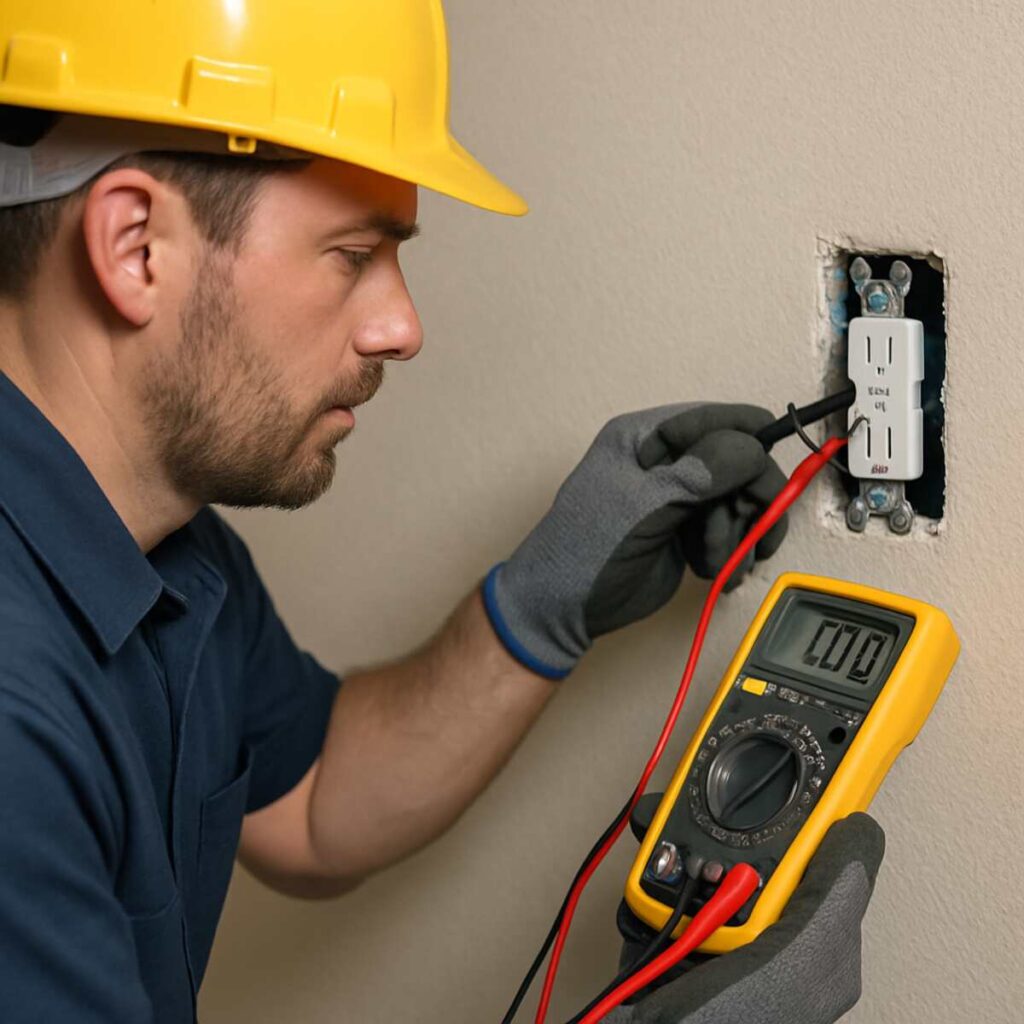
Once the environment is deemed safe, translating that invisible energy into readable data demands a different approach. Electricians use a digital tool called a multimeter to measure the precise pressure and flow of a circuit, acting much like a doctor’s stethoscope to diagnose why your lights flicker. While taking these readings, workers grip heavily insulated tools. These engineered pliers feature thick rubberized handles specifically designed to stop dangerous voltage spikes from ever reaching their hands.
Building the physical pathways behind your walls requires highly specific mechanical equipment. If you want a new ceiling fan, an electrician feeds a flexible steel coil called fish tape through the hollow wall space to pull new cables, entirely avoiding messy drywall demolition. When the cable finally reaches its destination, precision wire strippers carefully peel away the tough outer plastic jacket without putting a single scratch on the fragile conductive copper inside.
Ultimately, this high-tech toolkit serves to protect both your property’s integrity and the worker’s life. Mastering these instruments does not happen by simply reading a hardware store manual or watching a quick tutorial. Safely diagnosing live circuits and navigating blind wall cavities requires thousands of hours of supervised, hands-on repetition. Earning the right to wield this gear independently means climbing a strict professional ladder, progressing slowly from a closely watched beginner to a recognized master.
The Career Ladder: Apprentice vs. Journeyman vs. Master Electrician
Entering the electrical trade is not a casual decision; it requires dedication that rivals traditional higher education. The electrician career path begins at the bottom rung as an Apprentice. During this phase, individuals spend four to five years mixing classroom theory with thousands of hours of hands-on field experience. Because electricity is inherently dangerous, an Apprentice is never left alone to guess on a wiring job. They are constantly supervised by a senior professional, ensuring that every single connection meets strict safety codes before the power is ever turned on.
To understand who is showing up at your door, it helps to recognize the three core training milestones of this demanding profession:
- Apprentice (The Learner): Focuses on mastering the basics under constant, watchful guidance.
- Journeyman (The Doer): Executes complex repairs independently after passing a rigorous state exam.
- Master (The Designer): Oversees large-scale projects, navigates advanced building codes, and runs the business.
When you hire a local service company to upgrade your kitchen wiring, a Journeyman is usually the professional ringing your doorbell. In the strict hierarchy of apprentice vs journeyman vs master electrician, the Journeyman serves as the highly capable backbone of the residential industry. Having successfully completed their thousands of supervised hours, they possess the deep practical knowledge needed to troubleshoot your flickering lights or install a new breaker panel without hesitation.
Reaching the absolute top of the field requires an incredible investment of time. By the time someone learns how to become a licensed electrical contractor and earns the Master Electrician title, they have typically accumulated up to 10,000 hours of training—often surpassing the total hours spent earning a traditional university degree. These veterans design complex home systems and ensure ultimate safety compliance, giving them the expert perspective needed to identify critical hazards during an emergency electrical repair.
Why You Need an Emergency Electrical Repair: Recognizing Critical Hazards
Recognizing when you need an emergency electrical repair often comes down to trusting your senses. While a dark house is a clear sign of trouble, dangerous threats usually start with a quiet sizzling noise near an outlet. This sound is caused by arcing, a dangerous situation where electricity jumps across a loose connection instead of flowing smoothly. Even minor sparking at a plug is a major system failure demanding immediate professional attention.
Beyond unusual sounds, your nose is your best defense for fire safety when wiring fails behind your drywall. If you notice a metallic odor similar to melting plastic near a switch, you are smelling “ozone.” This distinct ozone smell is created when wires overheat and their protective coating starts to burn. Because this melting happens out of sight, ignoring that warning scent allows a hidden hazard to grow rapidly inside your walls.
When you detect these red flags, your only safe response is walking directly to your breaker box. Look for a large switch labeled the Main Breaker, which acts as the ultimate gatekeeper for your home’s energy supply. By firmly flipping this single master switch to the “off” position, you instantly stop all power flowing into the house. Shutting down the system entirely is the fastest way to stop an overheating wire from sparking a disaster.
A completely dead panel simply pauses the crisis, meaning the underlying electrical emergency still remains unsolved inside your walls. Turning the power back on without fixing the melted wires will instantly restart the danger. Because repairing compromised wiring involves complex, high-stakes circuits, protecting your biggest asset requires hiring a bonded and insured professional.
The Importance of Hiring a Bonded and Insured Electrician: Protecting Your Asset
Once the immediate danger is paused at your breaker box, making the right phone call becomes critical. When hiring an electrician, the phrase “licensed, bonded, and insured” protects your bank account as much as your house. A basic business license simply means a company pays local taxes. Conversely, a trade-specific electrical license proves the professional has spent years mastering the National Electrical Code—the universal safety rulebook—ensuring your home stays completely safe.
Beyond holding a valid license, true professionals carry a financial guarantee known as a surety bond. Think of a bond as a dedicated security deposit protecting you if a contractor abandons a project or performs illegal work. Should a kitchen wiring job fail a city inspection, this fund pays a new professional to correct the mistakes. Exploring the benefits of hiring a bonded and insured electrician reveals that this unique safety net prevents you from ever paying twice for the exact same job.
Accidental property damage highlights the necessity of robust contractor insurance, specifically liability coverage. If a wiring mistake sparks a fire, the professional’s insurance pays to fix the resulting destruction. Many homeowners wrongly assume their standard home policy automatically covers these disasters regardless of who caused them. In reality, if an uninsured handyman causes an electrical fire, your personal insurance provider will likely deny the claim, leaving you completely responsible for the devastating loss.
Guarding your biggest asset requires verifying these credentials before anyone ever opens your breaker panel. Professionals who eagerly provide their documentation demonstrate a deep respect for their dangerous trade and your peace of mind. Confirming this invisible safety net ensures your family and finances remain secure during major repairs. With these essential protections established, you can safely empower your home’s future with a clear action plan.
Empowering Your Home’s Future: Your Electrical Action Plan
You no longer just see a light switch; you now recognize the invisible infrastructure powering your life. Recognizing what an electrician does reveals they are much more than wire-pullers—they are essential partners in your daily electrical safety.
Every calculation they perform and code they follow protects your family from unseen hazards. Treating professional electrical work as an investment in safety ensures your system runs efficiently without dangerous compromises.
While licensed experts handle the complex currents hidden behind your drywall, you act as the vital first line of defense. Proper home maintenance starts with simply observing the visible signs of your system’s health.
To build confidence and stay ahead of repairs, complete this simple annual checklist:
- Test GFCIs: Press the test buttons on kitchen and bathroom outlets.
- Inspect cords: Look for frayed wires or warm appliance plugs.
- Check outdoor lighting: Ensure exterior fixtures are free of water damage.
- Audit surge protectors: Replace older strips to protect sensitive electronics.
Completing this basic checklist helps you become more aware of your home’s energy flow and potential hazards. If you spot a warning sign or get stuck, remember that a qualified pro is ready to handle the technical troubleshooting safely.
By maintaining your visible fixtures and trusting the complex wiring to the experts, you ensure your home remains a safe, brilliantly powered sanctuary.
