

Have you ever been hunting for the best deal on a flight, only to refresh the page and see the price has gone up? That frustrating experience isn’t a coincidence; it’s your digital address working against you. This practice, often called dynamic pricing, is a deliberate strategy websites use based on what they know about you, and it all starts with one simple piece of information. Select the best proxies for social media accounts.
Every device connected to the internet has an IP address, which stands for Internet Protocol address. The easiest way to understand what is an IP address is to think of it as the mailing address for your online activity. When you visit a website, your computer sends a request from its address, and the website sends the information back to that same address. It’s the fundamental system that makes the internet work.
Because this address is public, however, websites use it for more than just sending you cat videos. In practice, this form of web tracking works like a store owner recognizing a familiar face. When a travel site’s server sees your IP address return repeatedly to check the same flight, it can assume you’re highly interested and raise the price, knowing you’re more likely to buy. According to industry analysis, this can happen with everything from plane tickets to online retail goods.
This leaves you at a disadvantage, unable to see the unbiased information a first-time visitor would. So, how do you level the playing field? The key is to stop being a recognizable customer. What if, instead of showing up with the same digital address every time, you could wear a different disguise for every single visit? This is precisely what a rotating proxy allows you to do.
What is a Proxy Server? Your First Step to Online Anonymity
Think of your IP address as your home address on the internet. You wouldn’t hand it out to every stranger, but that’s essentially what happens every time you visit a website. It’s how sites remember you, for better or worse. A proxy server offers a simple solution by acting as your personal online post office box. It’s a middleman that stands between you and the websites you visit, creating a basic layer of privacy.
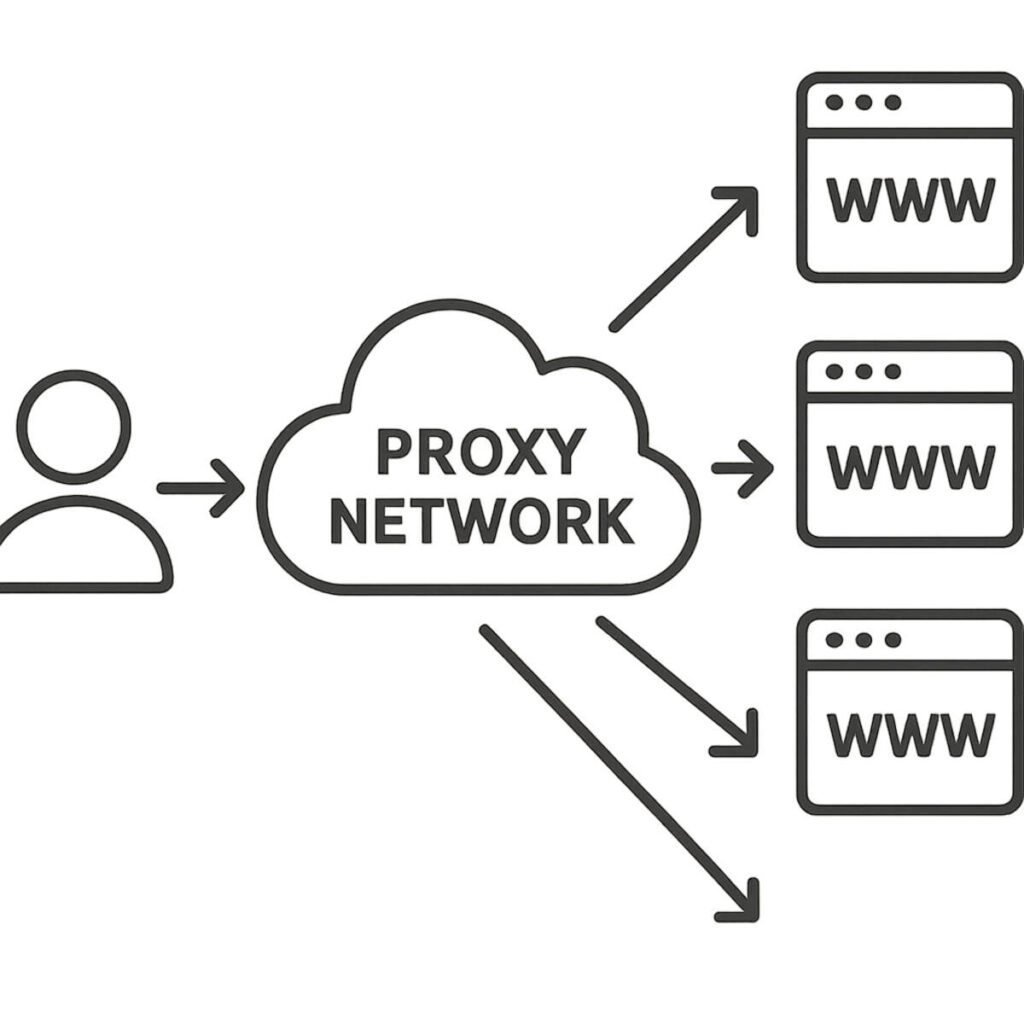
Instead of your computer sending a request directly to a website, it first sends it to one of these anonymous proxies. The proxy server then forwards your request to the website using its own IP address. When the website sends information back, it goes to the proxy, which then relays it to you. The website only ever sees the proxy’s address, never your real one. It’s like sending a letter through a forwarding service that puts it in a new envelope with its own return address.
For a single, simple task, this works perfectly. You get to browse a website without revealing your true digital location, which is the core benefit. But what happens when that one forwarding address becomes too popular? If a website sees thousands of requests coming from the same proxy, it might get suspicious and block it. This single disguise, it turns out, has a major weakness.
The Problem with a Single Disguise: Why Your Proxy Can Get Blocked
That single disguise provided by a proxy server works well—until it doesn’t. Imagine dozens, or even hundreds, of people using the same public post office box. The mail carrier would quickly notice the unusual volume of mail going to one address. Websites are just as observant. They are designed to protect their data, whether it’s pricing information, flight availability, or user profiles. When they detect an unnatural number of requests coming from a single IP address, their digital alarm bells start ringing.
This defensive measure is often called rate limiting. Think of it like a bouncer at a popular club who only lets a person enter a few times in one night. If the same person tries to come in and out a hundred times, the bouncer will get suspicious and cut them off. Websites do the exact same thing to IP addresses. They limit how many times a single address can ask for information in a short period to prevent automated bots from overwhelming their systems or stealing data.
If the suspicious activity continues, the website might take the final step: a complete IP ban. This is where the proxy gets blocked entirely, rendering it useless for accessing that site. Your clever disguise is blown, and the door is slammed shut. It becomes clear that for any task that requires more than a few casual visits, a single proxy address is like a secret agent who wears the same trench coat and sunglasses on every single mission. Eventually, you’re going to get caught.
The Ultimate Secret Shopper: What Are Rotating Proxies?
If a single disguise is bound to get you noticed, what’s the alternative? Imagine instead of one trench coat, you had access to an entire costume department, allowing you to wear a new disguise for every single move you make. You’d be impossible to track. This is precisely the idea behind rotating proxies.
Instead of providing just one intermediary IP address, a rotating proxy service gives you access to a huge pool of them—thousands or even millions. Think of it as a magical address book that automatically gives you a new, clean address for every connection you make. This process of automatic IP address rotation means you never use the same disguise twice in a row.
To a website’s server, you no longer look like one person making a hundred requests from the same address. Instead, you appear as a hundred completely different people, each making a single, innocent request from their own unique address. Since no single IP address is ever overused, the site’s rate-limiting systems and digital alarm bells are never triggered.
Ultimately, this chameleon-like ability allows you to gather information, compare prices, or manage multiple accounts without fear of being blocked or fed different information. Your activity blends in seamlessly with the regular crowd of internet traffic.
How Automatic IP Rotation Works: The Magic Behind the Curtain
Where do all these disguises come from? A rotating proxy service doesn’t just have a few extra IP addresses; it commands a large proxy pool. This is essentially a vast, digital library filled with thousands, or even millions, of unique IP addresses sourced from all over the world. This massive collection is the secret ingredient that makes seamless rotation possible, ensuring a fresh, clean address is always available for your next request.
Managing millions of addresses sounds incredibly complicated, but the system is designed to be effortless for you. Instead of being given a giant list of IPs to choose from, you simply connect to one special gateway address. Think of this as the front desk of a grand hotel with a thousand rooms. You don’t need to know which room is clean and available; you just talk to the concierge. This “concierge server,” known in technical circles as a backconnect proxy, takes your request and automatically finds a perfect, unused IP address from the pool for you.
From your point of view, the entire process is invisible. You connect to that one concierge address, and that’s it. Every time you refresh a page or click a new link, the system assigns a different IP from its massive pool behind the scenes.
Use Case 1: How to Find the Best Prices Without Being Penalized
Have you ever found the perfect flight, only to come back an hour later and see the price has jumped? Many e-commerce and travel sites track your activity using your IP address. When they see you repeatedly checking the same product or route, their system can flag you as a highly interested buyer and automatically raise the price. This “dynamic pricing” means the more you search, the worse the deal can get.
Rotating proxies are a secret weapon for savings. By providing a new IP address for every connection, you appear as a completely new visitor each time you check a price. The website has no digital history of your previous searches, so it consistently shows you the standard, unbiased price. This method allows you to compare prices over and over—a simple and effective way of web scraping without getting blocked or triggering those annoying “Are you a robot?” tests.
The same principle applies far beyond travel. A small business owner can use this technique for market research, gathering competitor pricing daily without revealing their identity or getting cut off. It ensures the data you see is genuine, not inflated based on your browsing habits.
Use Case 2: How to Manage Multiple Social Media Accounts Without Getting Flagged
Many businesses rely on managing several online profiles, from a personal account to multiple brand pages on social media. However, platforms like Facebook, Instagram, and even e-commerce sites like Etsy can get suspicious when they see many different accounts operating from a single IP address. To their automated systems, this activity can look like spam or a single user creating fake profiles, putting your valuable brand accounts at risk of being flagged or suspended.
A clever use of proxies provides a solution for safe social media management. Instead of rapidly rotating your IP for every single click, you can assign a unique and consistent IP address to each of your accounts. Your first brand account always logs in from IP Address A, while your second account always uses IP Address B. To the platform, it simply looks like two different people are managing these accounts from two completely different locations, which is perfectly normal behavior.
This strategy is essential for marketers, agencies, or anyone managing multiple online storefronts. It protects your digital assets from being shut down by automated security systems, ensuring your business can operate smoothly without interruption.
Use Case 3: How to See Your Website as Customers Around the World Do
Have you ever visited a website that automatically knew your country, showing you prices in your local currency or content in your native language? This powerful feature, known as geo-targeting, allows companies to customize the user experience based on location. But it can also be used for geo-blocking, where content available in one country is completely hidden from another. This presents a major challenge: how can you know what your international customers are actually seeing?
Choosing a proxy in a specific country is invaluable here. Since every IP address is tied to a physical location, you can select a proxy server in Berlin, for example, to make it appear as if you’re browsing from Germany. A business owner in Chicago can instantly see how their ads are displayed in London or use it for SEO monitoring by checking their Google rankings in a Sydney-based search. This use of a proxy for market research provides a true, on-the-ground view without ever leaving your desk.
This capability transforms a proxy from a simple privacy tool into a crucial instrument for global business intelligence. It allows you to verify that your international marketing campaigns are running correctly, analyze regional competitor pricing, and ensure your website provides the right experience for every audience.
Aren’t Proxies Just a Fancy VPN? A Critical Distinction
While both tools change your IP address, they do it for fundamentally different reasons. A VPN is like getting a single, reliable disguise for a whole evening. You put on your new IP address and wear it everywhere you go, keeping your real identity private. It’s perfect for overall security and privacy.
A rotating proxy, on the other hand, is like having an endless bag of disguises—a new hat, wig, and sunglasses for nearly every click. This rapid changing of your identity is specifically designed to prevent websites from recognizing a pattern and blocking you during automated or repetitive tasks.
This core difference makes them suited for entirely different jobs. Use this guide to settle the proxy vs vpn debate:
- VPN (Virtual Private Network)
- IP Address: One stable IP for your entire session.
- Best For: Securing your whole internet connection on public Wi-Fi or streaming content from another region.
- Rotating Proxy
- IP Address: A new IP for every request or every few minutes.
- Best For: Tasks that require many quick connections, like comparing prices or managing multiple social media accounts.
In short, you choose a VPN for personal security and a rotating proxy for data-gathering missions. Not all proxy addresses are created equal—some look like they come from a real home, while others come from an office building.
The Two “Flavors” of Proxies: Is the Address a Home or an Office?
The source of your proxy’s IP address dramatically changes how websites perceive you. It’s the difference between sending a letter with a return address that points to a family home versus one that points to a massive, known corporate mailroom. This distinction gives us two main types of proxies: residential and datacenter.
First, you have datacenter proxies. These are the most common and straightforward. Their IP addresses originate from powerful computers housed in commercial data centers—the same kinds of places that host websites and business applications. They are fast, affordable, and available in large numbers. However, because websites know that everyday users don’t typically browse from a data center, these IPs can sometimes trigger security flags or blocks if used for sensitive tasks.
On the other side of the coin are residential proxies. These are the gold standard for appearing legitimate. A residential proxy uses an IP address that has been assigned by an Internet Service Provider (like Comcast, AT&T, or Verizon) to a real home device. To any website you visit, your request looks indistinguishable from that of a regular person browsing from their living room. The core dilemma in choosing between rotating residential vs datacenter proxies is a trade-off between the sheer speed of a data center and the unmatched authenticity of a real home address.
When You Need to Look Like a Real Person: Choosing Residential Proxies
For the strictest websites—the ones with constant security checks and “Are you a robot?” tests—residential proxies are essential. Since their IP addresses belong to real home internet connections, they carry an unmatched level of trust. To a website, your activity is indistinguishable from a regular customer’s, making them perfect for avoiding CAPTCHAs and instant blocks that other proxies might trigger. Your request doesn’t look like it’s coming from a business; it looks like it’s coming from a neighbor.
This authenticity is crucial for certain jobs. For instance, managing multiple social media accounts for a brand or checking prices on heavily guarded e-commerce sites requires you to look like a genuine user. Using anything less can get your accounts flagged or your access denied almost instantly. It’s why they are often considered the best proxy for large-scale data collection on websites that are highly sensitive to automated traffic, as they allow you to gather information without raising alarms.
This premium quality, however, means they are more expensive. Sourcing and maintaining a network of real residential IPs is far more complex than simply using servers in a business location. You’re paying for a superior level of access and legitimacy that is often necessary for success.
When Speed and Scale Are a Priority: Choosing Datacenter Proxies
While residential proxies offer unmatched authenticity, they aren’t always necessary. For tasks that prioritize speed, volume, and cost-effectiveness, datacenter proxies are the go-to solution. These IP addresses don’t come from home internet connections but are generated in bulk within commercial data centers. This streamlined creation makes them significantly faster and more affordable than their residential counterparts.
This speed and affordability make them perfect for jobs where you need to cast a wide net without deep cover. Think of tasks like monitoring search engine results across different cities or gathering general product information from websites with basic security. Because these IP addresses are easily identified as coming from a data center and not a person’s home, they are a poor choice for highly protected sites. They are a much better static proxy alternative, however, as rotation still prevents a single IP from being flagged for overuse.
Ultimately, the choice between rotating residential vs. datacenter proxies is a strategic one based on your target. Are you trying to blend in at a high-security event, or are you simply trying to get a job done quickly and cheaply where nobody is checking IDs? Understanding this trade-off is key.
Is It Legal to Use Rotating Proxies for Scraping?
Using a rotating proxy is perfectly legal. The technology itself is neutral, much like using a different car for various errands isn’t against the law. The proxy is simply a tool that provides a different IP address for your connection.
The real question of legality and ethics comes down to how you use that tool. Often, rotating proxies are used for web scraping—the process of automatically collecting public information from websites. This automated collection is where the rules of the road come into play, and where web scraping ethics become important.
A crucial line exists between gathering public versus private data. Collecting information that is visible to any visitor, like product descriptions or hotel rates, is generally acceptable. It’s the digital equivalent of walking into a store and writing down the prices you see on the shelf. However, attempting to access information that requires a login, such as a user’s personal account details or private messages, crosses a serious legal and ethical boundary.
Ultimately, the clearest guide is the website’s own rulebook: its Terms of Service (ToS). Many websites state whether they allow automated access. A simple, ethical framework is to be a good digital citizen. First, don’t harm the site by sending so many requests that you slow it down for other users. Second, when in doubt, respect the owner’s wishes. This approach allows you to gather valuable information responsibly.
How Often Should Your IP Address Change? Rotation Settings Explained
The optimal rate of change for your rotating IP depends entirely on your task, and most proxy services give you two main options.
The first option is to get a new IP address for every single connection you make. This method is perfect for tasks where you need to gather lots of separate pieces of information quickly, like checking the prices of 500 different products across a dozen websites. Because each request looks like it’s coming from a brand new person, the website’s servers never see a pattern and are less likely to block you.
However, what if your task involves multiple steps on the same site, like logging in, adding an item to a cart, and checking out? If your IP address changed between each of those clicks, the website would get confused and likely end your visit, thinking it’s a security error. For these situations, you need an IP that “sticks” with you for a few minutes. This allows you to complete your entire journey on the site looking like a single, consistent user.
Here’s a simple rule of thumb:
- For fast, repetitive tasks: Use a new IP for every request. This is ideal for comparing prices or monitoring search engine results.
- For multi-step actions: Keep the same IP for 5-10 minutes. This is necessary for managing an account or completing an online purchase.
Choosing the right rotation speed is all about matching the tool to the job. This flexibility is a critical feature to consider when you decide on a proxy provider.
What to Look For When Choosing a Rotating Proxy Service
Finding the right rotating proxy service is easier when you focus on a few key areas. To cut through the noise, just ask yourself these four questions about any service you consider:
- Proxy Types Offered: Does the service have the right kind of IP addresses for your task? Make sure they offer the type that fits your goal, whether it’s residential proxies for authenticity or datacenter proxies for speed.
- Pool Size: How many unique IP addresses are in their pool? A bigger pool is always better, as it dramatically lowers the chance you’ll be given a recycled IP that a website has already flagged.
- Ease of Use: How do you set up the service? The best providers for general use offer simple dashboards or browser extensions, allowing you to get started in minutes without needing to write any code.
- Customer Support: If you get stuck, can you get help quickly? Look for services that offer live chat or responsive email support. Good help is invaluable when you’re just starting.
The goal isn’t to find the most powerful or complex tool, but the one that makes your life easiest while effectively getting the job done.
When Is a Rotating Proxy the Right Tool for the Job?
If you’ve ever faced an online roadblock—like a sudden price hike, a geo-block, or an IP ban—you now know the likely culprit is your static, traceable IP address. A rotating proxy service solves this by providing a pool of different IP addresses, making you appear as a new visitor with each request.
This tool is the right choice when you face specific, recurring challenges online. You should consider using a rotating proxy if you are:
- A savvy shopper trying to find the best deals on flights or products without being targeted by dynamic pricing.
- A small business owner gathering competitor pricing or market data without being blocked.
- A digital marketer managing multiple social media or e-commerce accounts safely from one location.
- A global brand needing to verify ads, check SEO rankings, or view your website as customers in other countries do.
By matching the problem to the solution, you can overcome these common frustrations and access online information freely and fairly.
