

Our computers’ Random Access Memory (RAM) only stores data while it is active. The manuscript you spent two hours typing is in RAM and your word processor.
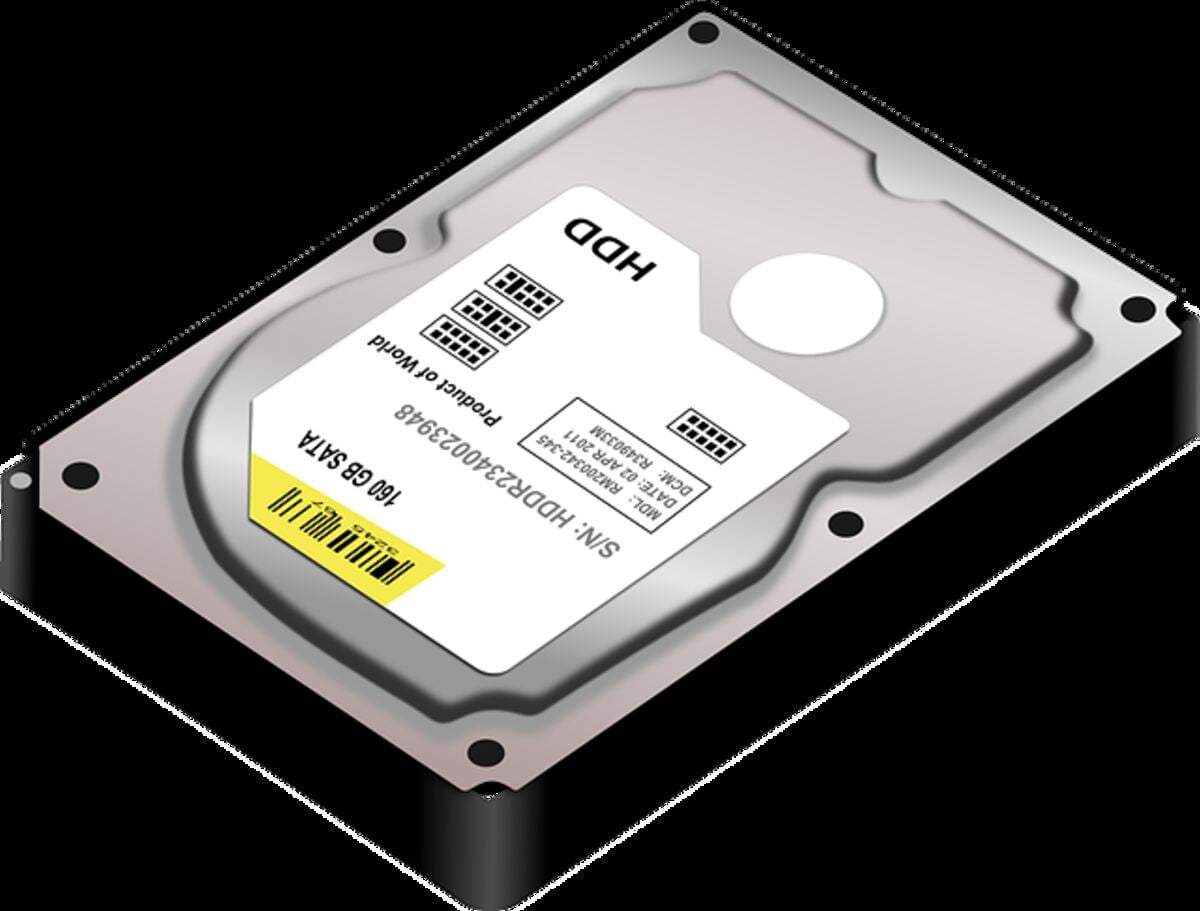
In an instant, your word processor and all your hard work will vanish if you turn off your computer or (heaven forbid) experience a power outage. The hard drive (hdd) apparently stores your work so you can return to it later.
The disc (or platter) within the hdd is similar to a cassette tape in that the stored data remains intact even when the power is switched off.
However, after some time with our laptops, the hard drive may become full or malfunctioning, resulting in sluggish performance and occasional error messages. The first option, expanding your storage capacity by installing a second hard disk drive, is what we’ll focus on here.
The time it takes for your hard drive to fill up is proportional to its size and how frequently you use your computer.
The average computer user can take a long time to do this. The hard drive on some computers may never be used to capacity.
A hobby that requires hundreds of images per week, such as amateur photography, can quickly fill up a hard drive. A new video camera and the desire to make, edit, and save files can quickly lead to the exhaustion of a hard drive.
So, if you see a warning that you’re running out of storage space, it’s time to get rid of some files. Alternatively, you can get a new hard drive.
External USB hard drives are convenient, but if you’re on a tight budget, an internal hard drive can be installed for much less, or the same amount of money can get you a much larger hard drive.
If you can use a screwdriver, you should have no trouble with the procedure.
Preparation:
My first step is to go into the computer’s BIOS and look at the complex drive settings. Likely, you’ve never seen the BIOS screen before, and after we’re done here, I wouldn’t recommend entering it again unless necessary.
At this time, we will only examine the currently configured settings. However, it is possible to alter the BIOS in such a way as to prevent Windows from loading or even the computer from turning on.
When you power on (or restart) your computer, a notification will appear at the bottom of the screen, instructing you how to access the BIOS.
The Del key (Supr key on Spanish keyboards where I reside) is usually the one to press. However, the F2 or F10 keys may be used instead. I’ve witnessed the use of the Ctrl+S shortcut.
Follow the on-screen instructions to determine which keys you need to press, then press the Reset button on the front of your computer.
If the BIOS installation went smoothly, you should see a blue or black screen with plain writing and the words BIOS or Setup at the top. Whether Award (Phoenix), AMI (American Megatrends Inc.), or another manufacturer is responsible for your computer’s motherboard is up to chance.
The most popular format for author biographies is Award’s Phoenix, which features multiple “pages” laid out in a two-column layout. The up, down, left, and right arrow keys are used to navigate to the desired page, which is then selected using the enter key. You will be taken back to the previous menu when you use the ESC key.
There are numerous customizable settings on each page. All I’ll mention about the BIOS, for the time being, is that we only want to view the hdd configuration and NOT make any changes.
The BIOS displays of other manufacturers function in the same way. However, they may have one column or a menu over the screen.
Phoenix Award BIOS’s hdd setup may be viewed by highlighting the Standard CMOS Features page and pressing Enter.
For example, with the AMI BIOS on my computer, the menu runs across the top, and the ‘Main’ page, which is the same as the ‘Standard CMOS Features’ page in the Award BIOS, is the default setting; no further action is required.
Your hard drive connections (IDE and SATA) and their respective models are listed here. Drives from Seagate begin with the letter ST, whereas those from Western Digital begin with the letter WDC. The names of Samsung and Toshiba models include the brands’ names.
‘Not Detected’ may appear if a port is checked for a hard drive but finds none. Only one IDE port (for a master and a slave IDE drive) and four SATA connectors are available on my Asus motherboard. Your BIOS is most likely unique. The device may only show the ports to which drives are physically attached.
If your BIOS doesn’t look like the ones listed, you’ll need to go through each page individually, looking for Primary IDE Master, Slave, SATA 1, 2, 3, 4, etc. If the page you’ve highlighted doesn’t include the information you need, you may easily navigate away from it by pressing the Esc key.
Identify which devices each drive is attached to on the computer’s drives screen. This includes optical disc players.
This data shows you which available ports can accommodate the new hard drive and gives you a fast readout of how well the installation went once you’re done. If you followed the steps correctly, the new drive should be shown on the list. Otherwise, it won’t show up, and if you messed with the IDE settings, the drive that was there before you started might disappear, too.
Now that we have what we need, and since we haven’t messed with the BIOS settings, we may power down the machine by holding the power button for 5 seconds.
In addition to a Phillips cross-head screwdriver, you’ll need to gather the necessary tools for the job before we get started. For instance, as a computer engineer, I have various cables from which to choose; however, you probably do not. Your cable needs (if any) will be determined by the hard drive you purchase.
You’ll need to ensure you have the correct goods on your shopping list when you head down to the local computer store, as there are several varieties of hard disk drives. To sum up, you need to inspect the inner workings of your computer to learn more about its current contents and any potential upgrades.
So, disconnect the computer’s wires and flip the power switch off behind the machine.
Spend a few minutes creating a picture of the cable setup if you need a reminder of where each cable goes. Except for USB devices, almost all cords only have a single plug.
Although your USB devices should function properly regardless of whatever USB port you plug them into, you may avoid confusion by always re-connecting them to the same port. If nothing else, remember the location of the USB ports.
The left side panel can be easily removed from a typical case desktop PC (as seen from the front).
The back border of the side panel will have a 90-degree lip and be attached with two Phillips screws. These two screws will allow you to raise the side panel away from the computer and slide it to the rear.
Please refer to your computer’s manual if you own a branded computer (Dell, HP, etc.), as the opening process may vary.
Remember that opening the case may nullify the warranty if it still has one (hopefully not by this point). However, it should be emphasized that the outcome would be the same if you took it to a local computer shop and they had to open it up.
The hard drive(s) and optical drive(s) are often installed in bays on the front of a typical computer casing. CD and DVD optical drives go in the more oversized bays on top, while hard drives fit in the smaller 3.5″ bays at the bottom.
Find your hard drive by its protruding end at the back of the bay; IDE/ATA, SATA, and SCSI are the three most common formats.
Although IDE hard drives are still the most common, they are gradually being phased out in favor of the faster SATA standard, which is now standard on all newly purchased computers. SCSI drives are still available but are typically only found in specialized computers.
In what ways am I motivated already?
Since the three types of drives are all roughly the same size but utilize different connections to connect to the system, checking what sort of drive(s) you already have is a simple matter of looking inside your computer to see what free connectors are available.
The IDE/ATA Drive Detection Procedure:
Western Digital’s IDE (Integrated Drive Electronics) interface standard is the ancestor of today’s widely-used ATA (AT Attachment) interface standard.
Four drives (hard disks and CD-ROMs) may be attached to older motherboards via their two IDE ports (primary and secondary), each of which could accommodate a master and slave device.
The flat ribbon cables used for ATA drives are typically gray and measure around 5 centimeters in width. They have three 40-pin connectors, one at either end and another midway along the wire.
Suppose you only have one IDE or ATA drive installed at the moment. In that case, the ribbon cable will be attached to the motherboard at one end, the drive at the other (presumably via the master connector), and a free slave connector will be available some 15 to 20 centimeters from the end.
Remember that a secondary IDE cable can be used if you also have an IDE CD-ROM or DVD drive or the slave connector on the primary IDE cable.
The female 4-pin Molex 8981 power connector on an IDE hard drive’s rear features one red, one yellow, and two black wires.
Methods for Identifying a SATA Hard Drive:
ATA (IDE) drives were replaced by the faster Serial ATA (SATA) drives in 2003, and ATA was renamed to Parallel ATA (PATA) to reflect this change.
While most modern motherboards provide one legacy IDE connector for backward compatibility, they typically include four or more newer SATA ports, making SATA drives the de facto standard for all new desktops, laptops, and netbooks.
I have red, blue, yellow, and black SATA data cables, all flattened like IDE ribbon cables but only about 1 centimeter wide and slightly thicker.
However, a separate data cable is required for each SATA hard drive because there is only one drive connector on SATA cables.
SATA drives have a flat data cable that goes into a SATA socket on the motherboard; there should be four of these sockets, but it doesn’t matter as long as one is free.
The power cable has one each of red, yellow, black, and orange plugs into the SATA socket on the far left of the hard drive’s back, while the data cable slots close to its right.
Modern power supply typically contains power ports for both IDE and SATA drives.
How to Tell if Your Hard Drive Is SCSI
The third and last type of hard drive adheres to a standard known as Small Computer System Interface (SCSI – pronounced scuzzy). While they are friendly and quick, they are also costly, so you almost certainly do not already have one of them on your computer without knowing it.
The data connector on the rear of these drives typically connects through a SCSI card rather than straight into the motherboard, making them easy to identify.
If the data connection on your hard drive is more comprehensive than your CD-ROM drive, you have a SCSI drive; otherwise, you have an IDE disk because the power connector is the same.
As these drives aren’t constantly in stock, your local computer store may have to particular order one for you, or you could just as quickly get another one online for far less money.
Time for a Choice
You probably only have one CD/DVD drive and one hard drive installed in your PC, and it doesn’t matter if the existing hard drive uses the antiquated IDE/ATA interface.
SATA drives are quicker and more widely available, so I recommend getting one if your motherboard supports them unless you’re strapped for cash and can find a used IDE drive of adequate size for next to nothing.
Whatever drive you choose, you’ll need a free power connector and a data cord.
Keep in mind that you are not limited to using drives of the same type; if you already have an IDE drive, for example, you can still add a new SATA drive.
In Conclusion:
An IDE disk drive is safe to buy if your computer has both a spare IDE power connector and an IDE ribbon cable with a spare connector.
If your motherboard includes a secondary IDE port not being used, you can acquire an IDE disk drive even if your computer only has one IDE ribbon cable and both the master and slave connectors are already in use.
To acquire a SATA disk drive, you must have a computer with a free SATA connection on the motherboard and a free SATA power connector on the power supply; additionally, you must have a SATA data cable.
An external USB drive is cheaper and more convenient if you don’t have any available IDE, SATA connections, or power connectors.
We who work with computers always have tons of 6-32 UNC drive mounting screws sitting about, so if you buy your new drive from a local computer shop, ask if they sell any.
Putting in a Drive:
We need to plug in your new drive, which you should already have, along with the appropriate data cord.
SATA Hard Disks
SATA drives require no particular setup; place them in an available bay and secure the screws.
Even though there are four screws total (two on each side), I usually only use two of them because installing the other two requires removing the opposite case side panel. This saves me time if I ever need to return to the computer to remove the drive.
The drive bays feature rails on either side to keep the drive horizontal, and the two screws you use to secure it also keep it from sliding.
The SATA power cable is plugged into the drive; however, the plug’s ‘L’ shaped ridge must be aligned with the drive’s corresponding groove in the correct orientation; otherwise, the connection will not hold.
Finally, connect the SATA data cable to the motherboard and the disk, taking care to align the ‘L’ shaped ridges on the plugs of both cables before inserting them.
It is irrelevant whether the end of a SATA cable is connected to the drive and which end is connected to the motherboard because the plugs on both ends are similar.
Putting in a new SATA drive is as simple as that.
Hard Disks with IDE/ATA Interfaces
All IDE devices need to be set as master or slave and have the appropriate connector attached because an IDE cable might have two devices attached, such as a hard drive as the master and a CD_ROM as the slave.
A tiny jumper shorts off two pins on the gadget’s back, which is how the device is set.
A sticker on the top of the drive will indicate the correct jumper values, although they might vary from manufacturer to manufacturer.
Putting a jumper on the two pins farthest from the power socket on a Seagate drive, for instance, designates the drive as the master device, whereas removing the jumper from those same two pins designates the drive as the slave device.
There are three connectors on an IDE ribbon cable; two are closer together at one end and are used to link the two IDE devices, while the third, which is located on its own, connects to the port on the motherboard.
The closer connector goes into the slave device, whereas the farther connector goes into the master device.
You can then set the jumper to correspond to the connector you intend to use with your new drive.
As long as the slave cable connector is in place, a second hard drive can be connected to the primary IDE channel and used as a slave. However, if given the option, I would always connect a new hard drive to the secondary IDE channel using a new IDE cable and establish it as a master.
Since the master and slave positions on the primary IDE channel are probably already occupied by your hard drive and CD/DVD-ROM drive, setting the new drive to master and plugging the master connector (the one at the very end of the new IDE cable) into the drive should be sufficient.
Then, using the two screws, you may secure the drive into an available bay.
Connect the drive using the unused end of the IDE ribbon cable, or use a new IDE ribbon cable to link the motherboard and the hard disk.
Since the IDE ribbon cable’s connector only fits one way, one of the edge wires will be colored in a different color to make it stand out. The correct cable plugging orientation is when the indicated wire is closest to the power connector.
Finally, insert the power connector into the new drive. Like the old drive, the new one has chamfered edges at the bottom, so it can only be plugged in one way. The proper orientation of the power plug has the yellow wire closest to you when looking inside the case from the left side.
At this point, you should be finished and, in an ideal world, would put the side panel back on, connect all the cables, and power your machine. However, you may want to leave the side panel off for a bit longer while you connect the cables and power up, just in case there’s a problem and you need to go back in and change anything.
You’ve successfully installed your new hard disk if, after turning on the computer and returning to the BIOS, you find a new HDD model number listed next to a port where none existed before, and all of the other drive models from before are still present.
Start troubleshooting if the new drive doesn’t appear (or an existing drive disappears).
Now that we’ve finished making modifications in the BIOS, we may power down the machine by holding down the on/off switch.
Trouble-Shooting:
Make sure all cables are present and securely inserted before proceeding.
Turn off your computer and insert the metal end of your Phillips screwdriver into one of the screw holes on the new hard drive’s case, then place the screwdriver’s handle to your ear. If the drive is powered on, you should hear the HDD drive motor whine and clicking noises through the screwdriver.
If it starts working, try the first power connector in the other drive; if that one stops working, try another one (there are typically a few unused ones). If none work, you have a dead drive and should return it.
If the newly installed drive is an IDE drive and it powers up properly, but an IDE drive that was previously working has disappeared from the list in the BIOS, the master/slave configuration jumper may have been set incorrectly. Only one device on an IDE ribbon cable can be master; the other must be slave.
Ensure the IDE drive configured as the master is plugged into the far end of the IDE cable and the IDE drive configured as the slave is plugged into the far end of the cable.
Ensure the power is off and attach the data connection to a different SATA port on the motherboard; with new SATA drives, you can conduct the screwdriver test for power, but there are no jumpers to do wrong.
If everything has gone according to plan up to this point, you should be able to switch on your computer and boot into Windows normally. If you’re using Windows XP, Vista, or 7, your new drive should be recognized automatically as new hardware.
Before you can utilize a brand-new drive, you’ll need to create and format a partition (or multiple partitions).
Some Windows versions may handle all or part of the operation automatically, with merely a prompt asking whether you’re sure you want to format the new drive.
This is a manual procedure because I run Windows XP, but it’s explained in detail in my post, “Preparing A Hard Disk For Use In Windows XP,” it’s not that difficult.
Barrie J Capel, originally from the United Kingdom but now residing in Tenerife, Spain, owns Computech Tenerife and its newly formed subsidiary, Computech Tenerife Web Designs. He has over 30 years of experience in hardware, software development, and IT Training for local government.
Now that he’s retired from hands-on IT instruction, he’s put his years of experience to good use by writing a series of “how to” instructions that he makes available on the Computech Tenerife website for free.
Visit many resources, including lists of services, free software, and other guides (many of which have helpful images and are downloadable as PDF files).
Read also: The Way To Install Kitchen Backsplash Porcelain Tiles.
