

Is your game night feeling a little stale? If you’re looking for something that’s lightning-fast, packed with excitement, and so easy you can learn it in five minutes, then it’s time to meet the Nana card game. Known in Thailand as Pok Deng, this social favorite is beloved for its beautiful simplicity. To find more, check on neuquafootball.com
Think of it as a super-fast version of Blackjack or Baccarat, but with a different magic number. The entire objective is to get a hand value closer to 9 than the person dealing the cards. This single, clear goal is the key to all the fun. Because the objective is so direct, the action is relentless. A single round often concludes in less than a minute, keeping the energy high and making it perfect for groups.
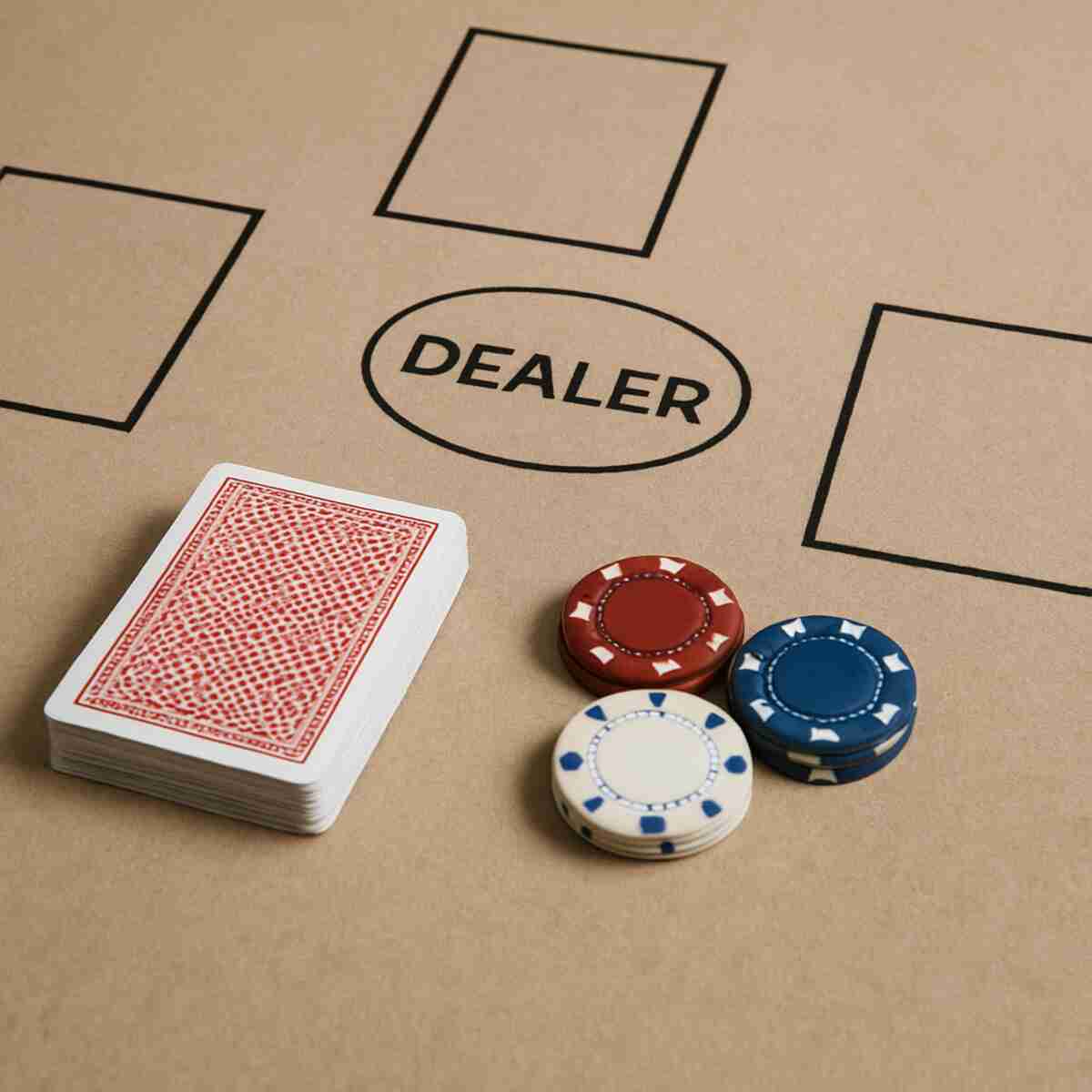
Best of all, you likely have everything you need to play right now. All it takes is a standard 52-card deck and something to use for betting chips, like coins or buttons. Let’s get you ready to deal.
What Do You Need to Play? Setting Up Your First Game
Getting a round of the Nana card game started is incredibly fast. First, choose a dealer, but in this game, we call them the “banker.” The banker plays against everyone at the same time. For your first game, simply have someone volunteer or deal a single high card to decide who gets to be the banker first.
With your banker chosen, it’s time for the other players to place their bets. Before any cards are touched, each player puts their wager (poker chips, coins, or any agreed-upon marker) in the space in front of them. This is the amount they’ll play for against the banker in this round.
Quick Setup Guide:
- Choose a Banker: One player takes on the role of the banker.
- Place Your Bets: All other players place their wager.
- Deal the Cards: The banker deals two cards, face down, to each player and then two to themselves, always dealing to themselves last.
- Let the Game Begin!
How to Score Your Hand: The Magic Number is 9
With two cards sitting in front of you, figuring out your score is the next step. In the Nana card game, your score is called your Taem (pronounced ‘dtem’), and the goal is to get a single-digit score as close to 9 as possible. The card values are incredibly straightforward:
- Aces are worth 1 point.
- Cards 2 through 9 are worth their face value (a 5 is 5 points, a 2 is 2 points, etc.).
- 10s, Jacks, Queens, and Kings are all worth 0 points.
If your total is a two-digit number, you simply drop the first digit. For example, if you have a 7 and an 8, your total is 15. You just ignore the “1” and your Taem is 5. Likewise, a Queen and a 6 is worth 6 points (0 + 6). The highest possible score is 9, and the lowest is 0.
The closer your Taem is to 9, the stronger your hand. But what happens if you’re dealt a perfect 8 or 9 right from the start? That brings us to the most exciting hand in the game.
What is a ‘Pok’? Your Ticket to an Instant Win
If your first two cards give you a perfect score of 8 or 9 right off the bat, you have a special, game-winning hand called a Pok (pronounced like “Bpoke”). Think of it as hitting the jackpot on the very first deal.
A Pok is so powerful that it stops the game in its tracks. If you are dealt a Pok, you immediately flip your cards over. This hand is an automatic winner against any of the dealer’s hands that isn’t also a Pok. You don’t have to make any more decisions or draw any more cards; your part of the round is over.
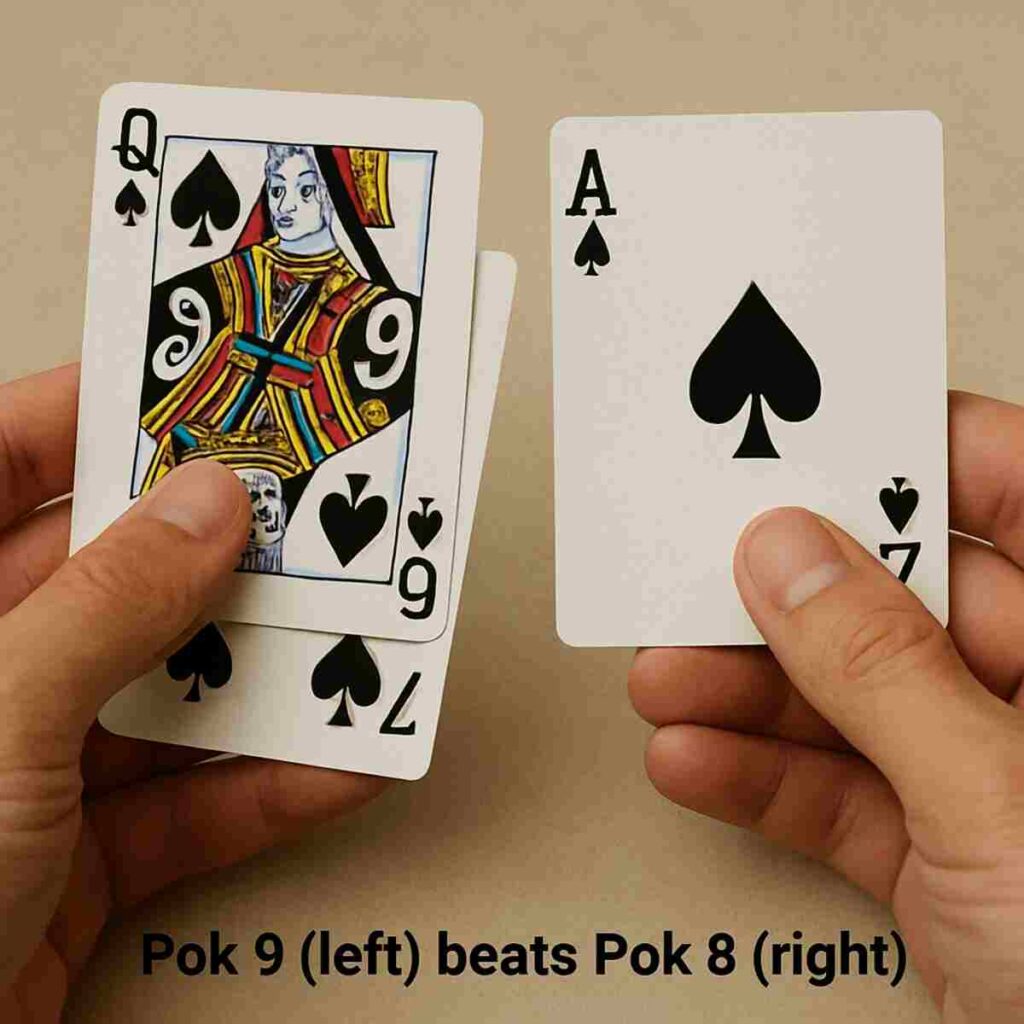
Of course, the dealer might also get a natural. In that case, the higher Pok wins. A Pok 9 (like having a 4 and a 5) is the best possible hand and will always beat a Pok 8 (like having a King and an 8). Getting a Pok is the ultimate goal, making every deal a moment of fun anticipation.
A Step-by-Step Guide to Playing One Round
The beauty of the Nana card game is its speed. From the first bet to the final reveal, an entire round often takes less than a minute. Everyone plays against the dealer, not each other, making it a fun, low-pressure experience.
- Place Bets: Before any cards are dealt, each player places their bet in front of them.
- The Deal: The dealer gives two cards, face down, to every player, including themselves.
- Check for Pok: Everyone peeks at their two cards. If any player or the dealer has a Pok (a natural 8 or 9), they reveal it immediately.
- Players Draw (or Stay): Starting with the player to the dealer’s left, each player without a Pok decides if they want to draw one more card to improve their score.
- Dealer Draws (or Stays): After all players have made their choice, the dealer decides whether to draw a third card for their own hand.
- The Showdown: All players reveal their hands. The dealer compares their hand to each player’s hand individually and pays out wins or collects losses.
Your hand only competes against the dealer’s. It doesn’t matter if another player has a higher score than you. If your score is 6 and the dealer has a 4, you win! This simple head-to-head showdown keeps the game moving quickly.
Hit or Stay? The Only Real Choice You Have to Make
You’ve peeked at your two cards, and it’s not an instant-win Pok. Now comes the moment that defines the game: do you risk drawing a third card, or do you stand your ground? This single decision is your main strategic lever.
For players, the guideline is refreshingly simple. If your starting hand totals 5 or less, you should almost always draw another card. With a score that low, you have a great chance of improving your hand. Conversely, if your hand is a 6 or a 7, the conventional wisdom is to “stay.” A 6 or 7 is a respectable score and is often strong enough to beat the dealer.
Trying to turn a good hand into a perfect one is a gamble that rarely pays off. Imagine you have a 6 and draw an 8; your new total becomes 14, and your final score drops to a measly 4. If your final score matches the dealer’s, it’s a “push.” No one wins or loses, and your bet is returned to you. A push is far better than losing your bet on a risky draw.
How the Dealer Plays: Understanding the Banker’s Fixed Rules
While you get to weigh the odds and make a gut call, the dealer enjoys no such freedom. The banker acts more like an automaton, and their hand is played according to a rigid, unchangeable script.
These strict rules are straightforward. If the dealer’s hand totals 6 or 7, they must “stay.” If their total is 5 or less, they are forced to draw another card. Their actions are based purely on this simple score—no special suits or clever plays can alter their mandatory move.
This predictability is your secret weapon. If you’re holding a 6 and you suspect the dealer has a low score, you can confidently stay, knowing they must draw and risk getting a worse hand. When you know exactly how the dealer will act, you can make smarter, calmer decisions.
What is a ‘Deng’? The Secret to Winning Double or Triple
Beating the dealer is great, but the chance to win more than your initial bet is where the real thrill lies. This is where multipliers, known as a Deng (pronounced “deng”), come into play. Think of a Deng as a bonus that rewards you for having a special kind of winning hand.
The most common bonus is Song Deng, which translates to “two bounces” or a 2x multiplier. You achieve Song Deng if your initial two cards are of the same suit. For example, if you are dealt a 4 of Spades and a 5 of Spades, your hand has a value of 9 and it’s a Song Deng. If the dealer has a lower score, you win double your bet.
When you win with a Deng hand, the dealer must pay you double your original wager. So if you bet one chip and win with a Song Deng, the dealer pays you two chips. While having two suited cards is a fantastic start, the world of Deng opens up even more with three-card hands.
Unlocking a Big Win: Special Three-Card Hands
While two suited cards give you a nice bonus, the real game-changers often appear when you draw that crucial third card. The undisputed king of these hands is the Three-of-a-Kind. If you end up with three cards of the same rank—like a trio of 7s—you’ve just landed one of the strongest combinations possible. This hand’s point value doesn’t matter; it automatically beats any standard score from the dealer.
A Straight Flush, which is three cards in order and of the same suit (like the 4, 5, and 6 of Diamonds), is another monster hand that brings a huge payout. A simpler version is the regular Flush, where you have any three cards of the same suit. This creates a Saam Deng, giving you a 3x multiplier on your bet if you win the round.
However, there’s one golden rule to remember: a two-card Pok always wins. If the dealer was dealt a natural Pok 8 or Pok 9 from the start, they win instantly. Your amazing three-card hand never even gets a chance to be revealed. Here are the special hands, ranked high to low:
- Three-of-a-Kind (e.g., 8-8-8): The best three-card hand. Often a 5x payout.
- Straight Flush (e.g., 4-5-6 of Hearts): Three cards in sequence and of the same suit. Also a massive payout, usually 5x.
- Flush (Three cards of the same suit): This is a Saam Deng, earning a 3x payout if it wins.
How to Play Nana with Just Two Players
What if your game night is just you and a friend? Nana shines as a fast and exciting head-to-head contest, and the best part is the rules are exactly the same. The game’s dynamic is distilled to its purest form: the player’s hand versus the dealer’s hand.
To set up a two-player game, simply decide who will act as the banker for the first few rounds. For a balanced match, it’s a great idea to switch roles periodically. A common house rule is to swap who is the dealer after every five hands or each time the deck is reshuffled. This keeps the game from feeling one-sided and gives both players a chance to be on either side of the bet.
Your Nana ‘Cheat Sheet’: Key Rules & Terms at a Glance
When you’re in the middle of a fast-paced game, it helps to have a quick guide. Keep this handy to instantly know where your hand stands.
- Hand Rankings (Best to Worst)
- Pok: A “natural” two-card hand totaling 8 or 9. This is the top hand and wins instantly against anything but a higher Pok.
- Three of a Kind: A three-card hand with three cards of the same rank (e.g., K-K-K).
- Straight Flush: A three-card hand of the same suit and in sequence (e.g., 5-6-7 of Spades).
- Normal Hand: If no one has a special hand, the winner is simply the hand with the higher point value (Taem) closer to 9.
- Key Terms to Know
- Pok (prounounced Bpoke): The name for a natural 8 or 9.
- Taem (prounounced Tame): Your hand’s score or “points” (0-9).
- Deng (prounounced Deng): A “bounce” or multiplier that increases your payout.
- Song Deng: A 2x multiplier (double win), often for a two-card suited hand.
- Saam Deng: A 3x multiplier (triple win), often for a three-card suited hand.
You’re Ready to Deal!
You now have all the rules needed to deal, play, and win a full, exciting game of Nana. You’re ready to gather friends, explain the objective, and lead your first round of one of the world’s most accessible card games.
Don’t overthink the strategy; the beauty of this game is its simplicity. If you can remember to aim for 9 and that a low hand is a good reason to draw, you have mastered the core of Pok Deng. With the instant-win power of a Pok in your back pocket, you are more than prepared for the fun ahead.
The only step left is to move from screen to tabletop. Grab a standard deck of cards, find a friend or two, and introduce the next big hit. Shuffle the deck, choose your dealer, and get ready to shout “Pok!”
